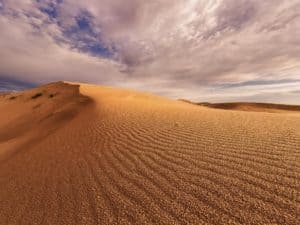
Most people picture Texas as dry and flat, but honestly, that’s missing a whole side of the state. There are hidden waterfalls scattered through parks, forests, and some pretty remote corners.
I’ve found that tracking down these lesser-known waterfalls is an excellent way to experience a quieter, more surprising Texas. Each spot brings its mix of cool water, wild rock shapes, and peaceful corners.
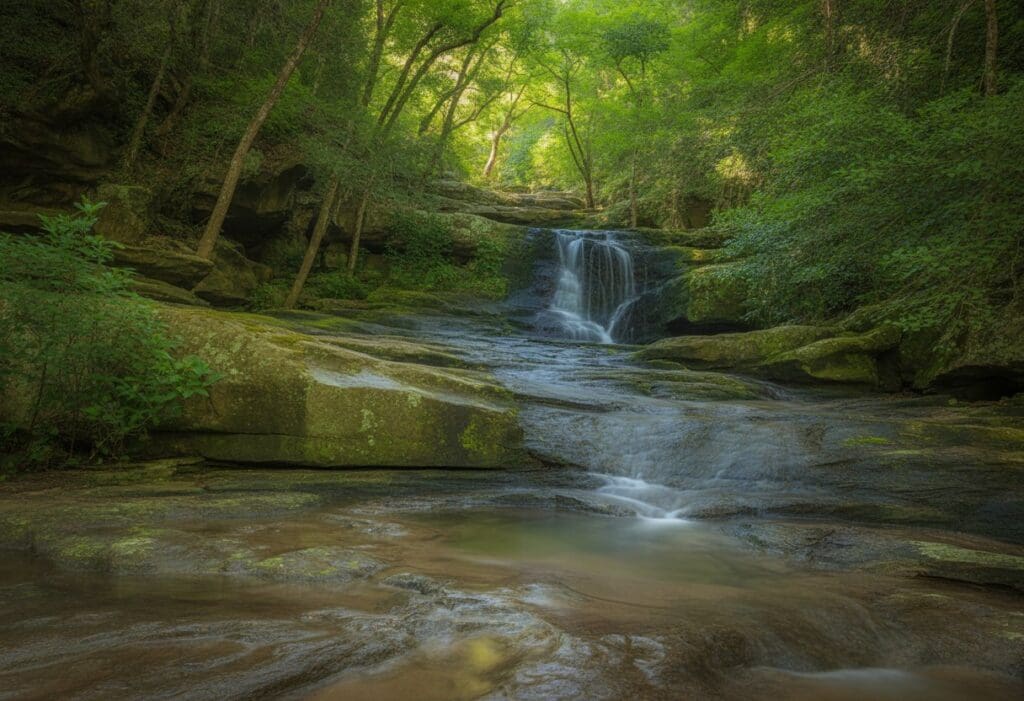
Some of these waterfalls are just a quick hike from the parking lot. Others? You have to work for them, but the payoff is worth it.
Discovering places like Gorman Falls, Cattail Falls, or some random creek with no name always reminds me how much variety Texas hides.
If you’re itching for a new adventure or want to ditch the crowds, these secret waterfalls are a solid bet. Next time you need to get away, maybe try hunting down one of these quiet spots.
What Makes Texas Waterfalls Unique
Texas waterfalls stand out primarily because of where they are and how much they change with the weather. The landscape here is all over the place, so each waterfall feels a bit different.
Some flow year-round, while others only show up after a good rain.
Geographic Diversity of Waterfalls in Texas
You can find waterfalls in a bunch of different Texas regions. The Texas Hill Country is packed with limestone cliffs and clear streams, so you get spots like Hamilton Pool and Pedernales Falls.
These falls usually have turquoise pools and are tucked into green woods and rocky bluffs.
Heading west, Big Bend hides waterfalls like Cattail Falls in desert canyons. East Texas, with its thick forests and steady rain, has smaller but steady creeks and gentle falls.
Some waterfalls pop up along the state’s rivers, while others are hidden deep in state parks or natural preserves.
Texas covers deserts, forests, prairies, and hills, which means you get a wild mix of waterfalls. Each region shapes them in its way.
Seasonality and Waterfall Flow
Texas waterfalls change a lot with the weather. In dry months, some shrink to a trickle or vanish.
Others, like Gorman Falls at Colorado Bend State Park, run all year but roar after a spring rain.
In the Hill Country, creeks and rivers swell after big storms, making the falls loud and dramatic. But by late summer or during droughts, everything slows down.
So, if you want to see the larger falls at their best, try going right after it rains.
Table: When to See the Best Flow
| Waterfall | Best Season | Notes |
|---|---|---|
| Hamilton Pool | Spring, after rain | May close after floods |
| Pedernales Falls | Spring/Fall | Not safe for swimming during flood stage |
| Gorman Falls | Spring/Early Summer | Runs year-round, stronger after rain |
| Cattail Falls | After heavy rain | Usually dry otherwise |
Types of Waterfalls Found in Texas
Texas waterfalls come in all kinds of shapes. Hamilton Pool, for example, is a plunge waterfall that drops straight into a deep pool.
McKinney Falls has those classic cascades, where water tumbles down the steps of limestone.
Gorman Falls flows over mossy rocks, making a soft curtain of water. In the Hill Country, I see a lot of spring-fed or rain-fed streams trickling off rocky ledges.
In the east, lush plants crowd around the falls, while in the west, they’re hidden in dry, rocky canyons.
Some of these falls are seasonal, while a few run all year, depending on where their water comes from. Honestly, the variety keeps waterfall hunting in Texas from ever feeling boring.
Top Hidden Texas Waterfalls to Explore
Texas has some stunning waterfalls tucked away in natural preserves and parks. Each one stands out because of its geology, pools, and the wild scenery around it.
Hamilton Pool Preserve in Dripping Springs
Hamilton Pool Preserve sits just west of Austin, near Dripping Springs. I love this spot for its collapsed limestone grotto, which creates a shaded pool and a waterfall that spills from a 50-foot overhang into turquoise water.
Swimming is sometimes allowed, but closures happen if water quality dips or for maintenance. You’ll usually need a reservation.
The hike to the pool is short and rocky, but doable for most folks. Limestone cliffs and native plants surround the area, so it’s a great place for photos.
No glass or alcohol is allowed, and lifeguards aren’t always on duty.
Quick facts:
| Feature | Details |
|---|---|
| Height | ~50 feet |
| Swimming | Sometimes allowed (check conditions) |
| Hike length | ~0.25 miles (rocky) |
| Reservation | Usually required |
Gorman Falls at Colorado Bend State Park
Gorman Falls sits inside Colorado Bend State Park, near Bend. This waterfall is about 70 feet tall, wrapped in ferns and travertine rock.
The hike is 1.5 miles each way and gets pretty steep and rocky, but it’s part of the fun.
You can’t swim at Gorman Falls because the formations are fragile, but a lookout platform puts you right up close to the water as it tumbles over mossy rocks.
Bring water and good shoes; you’ll need them. Colorado Bend State Park also has camping, wild caves, and fishing, so you can easily make a day of it.
Highlights:
- Height: 70 feet
- Hiking required: Yes (moderate-to-difficult trail)
- Best view: Designated platform
- No swimming allowed
Cattail Falls in Big Bend National Park
Cattail Falls hides out in the Chisos Mountains of Big Bend National Park. It’s quiet and way less crowded than most of the park.
Getting there means a nearly 6-mile round-trip hike through the desert, but you end up at a shady spot with cottonwood trees and a thin ribbon of water trickling down volcanic rock.
The waterfall looks best after rain, when there’s water flowing. Big Bend has fragile habitats, so I always stick to the marked paths.
Sometimes the area closes to protect wildlife, so check the trail status before heading out.
What to know:
- Round-trip hike: About 6 miles
- Flow varies by rainfall
- No swimming
- Check for seasonal closures
Krause Springs in Spicewood
Krause Springs is a privately owned spot in Spicewood, northwest of Austin. It’s got more than 30 natural springs, and a lovely waterfall pours into a big swimming hole.
This place is super family-friendly, with picnic areas, gardens, and even a butterfly garden.
You can swim in the pool below the waterfall or a nearby artificial pool. The water stays cool and clear—perfect for summer.
Camping’s available, and there’s a day-use fee. Krause Springs is open all year, but summer gets busy.
Features at a glance:
| Activity | Available |
|---|---|
| Swimming | Yes |
| Camping | Yes |
| Picnic areas | Yes |
| Restrooms/showers | Yes |
Other Remarkable Hidden Waterfalls in Texas
Texas hides a bunch of waterfalls that most people miss. Some are in state parks, others take a little more effort to reach, but honestly, if you love nature, they’re worth the trip.
Pedernales Falls and Twin Falls
Pedernales Falls and Twin Falls sit inside Pedernales Falls State Park, not far from Johnson City. The falls spread across wide, flat limestone, making the place look almost alien.
The river moves fast after heavy rain, so I always check conditions before I go. Swimming isn’t allowed at the central falls, but you can wade further downstream.
The Twin Falls Nature Trail is a short walk to a quieter, more tucked-away set of falls. These are smaller and shady, and they don’t draw big crowds, making them great for peaceful photos.
Trails are well-marked, and the park staff are good about sharing safety tips.
Quick Facts Table:
| Feature | Details |
|---|---|
| Location | Near Johnson City, TX |
| Park Activities | Hiking, wading, picnics |
| Water Access | Hiking, wading, and picnics |
| Best Time to Visit | After recent rainfall |
McKinney Falls State Park
McKinney Falls State Park sits inside Austin’s city limits but still feels like a hidden getaway. There are two main falls: Upper Falls and Lower Falls, both fed by Onion Creek.
Their flow changes with the rain. When water levels are up, both falls are broad and strong, perfect for swimming, fishing, or just hanging out by the water.
I like Upper Falls for a quick swim, and Lower Falls is usually quieter if things get busy.
The park has marked hiking and biking trails, shaded picnic tables, and easy parking. There’s an entry fee, and after heavy rain, hours might change due to flooding.
Pets are OK if you keep them on a leash.
Key Features:
- Location: South Austin
- Activities: Swimming, hiking, fishing, biking
- Facilities: Restrooms, picnic areas, campgrounds
Devil’s Waterhole at Inks Lake State Park
Devil’s Waterhole in Inks Lake State Park is famous for its rocky setting and swimming hole. The waterfall here is seasonal, so it’s best after big rains, but the area’s always worth a visit.
The hike is short and a bit rocky. I often see folks kayaking, cliff jumping, or just chilling on the rocks.
Park staff are strict about safety, so only dive where it’s posted.
The real draw is swimming in clear, cool water surrounded by cliffs and native trees. Inks Lake State Park also has camping and fishing, so you can stay overnight or just come for the day.
Details Table:
| Feature | Information |
|---|---|
| Location | Inks Lake State Park |
| Activities | Swimming, hiking, kayaking |
| Waterfall Season | After heavy rains |
| Accessibility | Short, rocky trail |
Westcave Preserve Waterfall
Westcave Preserve, near Austin, is a protected nature area with guided tours that take you to a beautiful hidden waterfall. The preserve protects both the land and the wildlife living there.
To reach the 40-foot Westcave Waterfall, I sign up for a tour through a limestone canyon filled with ferns and moss. The grotto is calm and quiet, and the waterfall drops gently into a clear pool.
Tours are limited, and you have to book ahead. The rules help keep the place healthy for plants and animals.
I’d suggest sturdy shoes and a camera—the walk can get slippery, and the views are something else.
Features List:
- Guided access only
- 40-foot waterfall
- Limestone canyon and grotto
- A reservation is required for entry
Hidden Urban and Lesser-Known Waterfalls
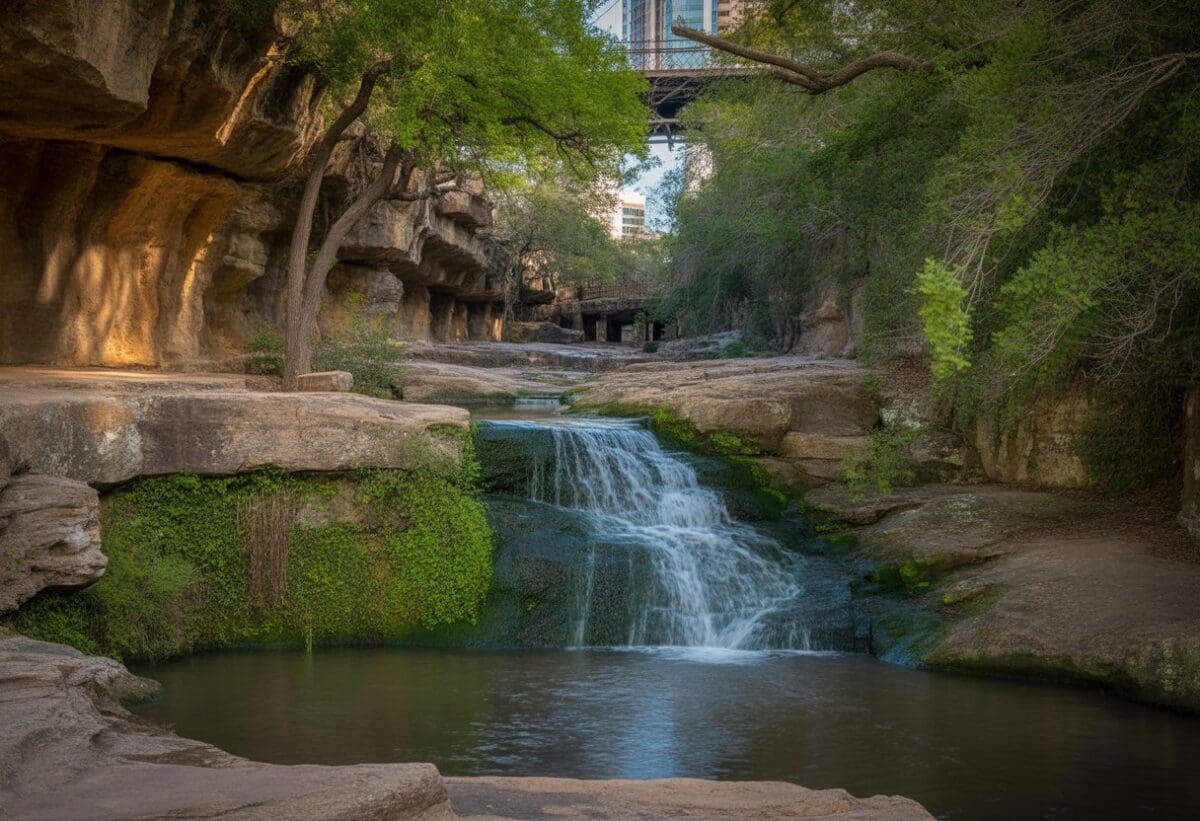
Texas tucks away some pretty cool waterfalls right inside or just outside its cities. You don’t have to drive hours into the wild—sometimes, a quick escape is just around the corner, where city noise fades into the sound of water.
Wichita Falls in Lucy Park
Wichita Falls, the city’s namesake, is an artificial waterfall right in Lucy Park. The original falls washed away in a flood back in the 1800s, so the town rebuilt this 54-foot cascade, pumping water from the Wichita River.
Lucy Park sprawls out with walking trails, picnic tables, and playgrounds. The waterfall’s a short, easy walk from the parking lot, so you don’t have to be an athlete to get there.
People often come here for photos, outdoor weddings, or to relax for a bit. I love how peaceful it feels—on a quiet weekday, the water drowns out the usual city buzz.
Quick facts:
- Location: Lucy Park, Wichita Falls
- Height: About 54 feet
- Accessibility: Paved paths, close parking
- Best time: Spring and early summer, when everything’s extra green
Waterfalls in Austin and the Surroundings
Austin hides several waterfalls, some more famous than others. Hamilton Pool Preserve, for instance, sits inside a collapsed limestone grotto outside town and feels like its own world. The waterfall drops into a deep, round pool, surrounded by rocky walls and leafy shade.
McKinney Falls State Park, right inside Austin’s city limits, has both Upper and Lower Falls. People hike, swim, and fish here all year. Krause Springs, over near Spicewood, is privately owned but open to the public—a spring-fed swimming hole, shaded by towering cypress trees, with waterfalls spilling in.
Comparison Table:
| Waterfall | Location | Type | Swimming Allowed |
|---|---|---|---|
| Hamilton Pool Preserve | Near Austin | Natural | Yes (sometimes) |
| McKinney Falls | Austin | Natural | Yes |
| Krause Springs | Near Spicewood | Natural/Spring | Yes |
Each one has its vibe—Hamilton Pool feels almost prehistoric, while McKinney Falls is all about easy trails and picnic spots. I’d always double-check hours and swimming rules before heading out; things change with the weather or crowds.
Planning Your Visit to Texas’s Hidden Waterfalls
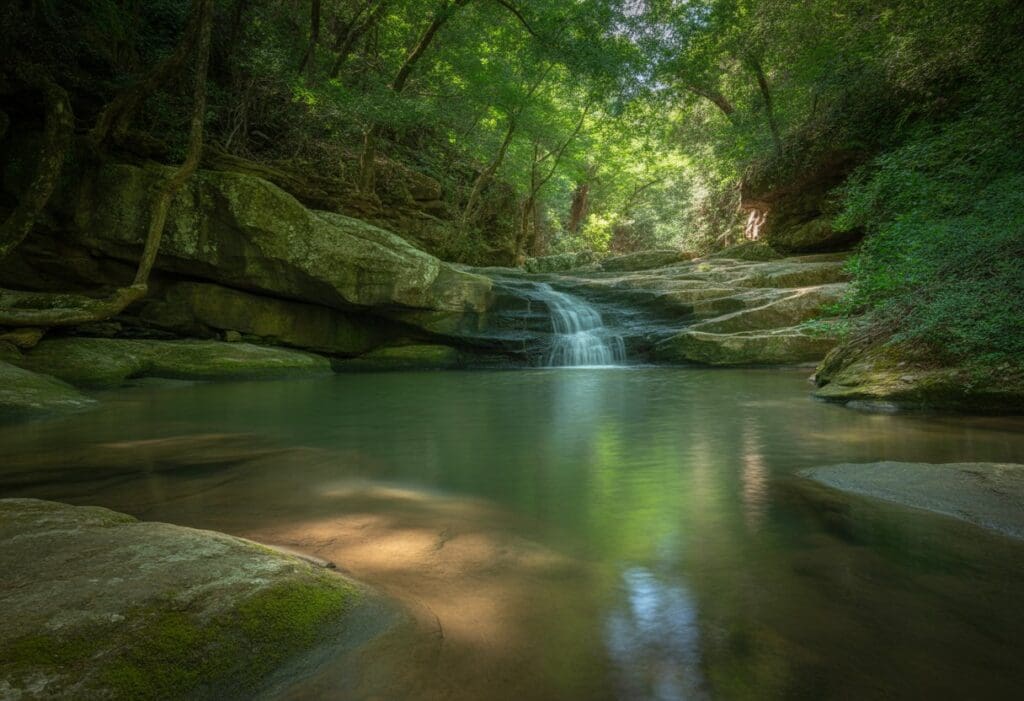 Whenever I plan a waterfall trip, I want it to be fun and safe. Figuring out how to get there, when to go, and how to take care of the place matters to me.
Accessibility and Trail Information
Getting to these hidden falls isn’t always a stroll in the park. Some, like Cattail Falls or Window Trail Waterfall in Big Bend, mean hiking several miles on rocky, sometimes sun-baked trails.
Gorman Falls in Colorado Bend State Park has steep, rocky sections that call for sturdy shoes. I always look up trail info ahead of time, just in case there are closures or tricky spots.
Some parks hand out maps at the entrance, which helps if the trail gets confusing. Entry fees and hours can change, and places like Krause Springs or Hamilton Pool sometimes require reservations or limit guests on busy days.
After heavy rain, some trails close for safety, so I check the park’s website before heading out. Not all trails are stroller- or wheelchair-friendly, so I try to match the hike to who’s coming with me.
Best Times to Visit
When I go, it makes a big difference. Cooler months—late fall through early spring—are best for hiking, and waterfalls usually have more water after rain.
Summer’s brutal in Texas, with high heat and sun that can make even short hikes tough. I like to visit early in the morning, on weekdays, or during off-peak times to dodge crowds, especially at hot spots like Hamilton Pool or Pedernales Falls.
A little rain before my trip usually means better waterfalls, but big storms can shut things down for a while. I always check the weather and trail conditions before I leave. Wet rocks can be slick, and during droughts, some falls shrink to a trickle.
Essential Safety and Preservation Tips
I never hit the trail without good shoes, plenty of water, snacks, and sun protection—hat, sunglasses, sunscreen, all that. Even short hikes can wipe you out in the Texas sun.
Leaving no trace is a must for me. I pack out my trash, stick to marked trails, and leave plants and animals alone. At certain spots, like Gorman Falls, swimming isn’t allowed to protect the ecosystem, so I enjoy the view.
Wildlife’s part of the adventure—birds, deer, sometimes snakes. I stay alert, give animals space, and never feed them. Following park rules keeps these places special for everyone who comes after.
Best Regions for Hidden Waterfall Adventures
Texas hides its best waterfalls in some unexpected places. I’ve wandered through these regions and found each has its flavor—sometimes it’s dramatic cliffs, sometimes it’s shady forest pools, and sometimes it’s a desert oasis that barely seems real.
Hill Country Escapes
The Texas Hill Country rolls with limestone hills, rocky bluffs, and spring-fed streams. I keep coming back here for the waterfalls, especially near Austin.
Hamilton Pool Preserve stands out for its turquoise water and massive grotto. Even with its fame, it still feels like a hidden spot. Pedernales Falls State Park has water tumbling over wide, flat rocks—a great place to hike or picnic. Westcave Preserve hides a 40-foot waterfall in a lush, fern-filled canyon.
Most of these require a short hike. Krause Springs is a favorite for swimming, especially when the heat kicks in. Hill Country waterfalls shine after a good rain, so spring or early summer is when I try to visit.
West Texas Waterfalls
West Texas doesn’t usually scream “waterfall,” but a few gems hide out there. Big Bend National Park and the Chisos Mountains offer a break from the desert with some surprising falls.
Cattail Falls in Big Bend only appears after rain, tucked among desert plants and tall cliffs. It’s a moderate hike, but the payoff is worth it. Devil’s Waterhole at Inks Lake State Park is another favorite, with deep swimming holes cut into rocky hills.
Capote Falls claims the title of Texas’s tallest at 175 feet, but it’s on private land and tough to access. These West Texas spots look best after seasonal rains, but they can dry up fast. I always check the weather and trail updates before heading out.
Central and East Texas Hidden Gems
Central and East Texas look and feel different, with thick forests, winding creeks, and shady canyons. Waterfalls here tend to be smaller, but you’ll often have them all to yourself.
McKinney Falls State Park sits right inside Austin’s city limits. I like dropping by for the mellow trails and how you can walk up to the Upper and Lower Falls.
It’s a solid spot for families, honestly. If you head further east, Cedar Creek Falls hides out in Palo Duro Canyon, a surprising little oasis tucked into all that red rock.
Lost Maples State Natural Area, west of San Antonio, has several gentle cascades along its forested trails. The falls look their best after a good rain, and the area’s perfect for hiking or birdwatching.
Out here, pools and creeks wind under cypress, oak, and maple trees. It’s a quiet, peaceful stretch of Texas that’s easy to miss.

Christian Linden is a seasoned writer and contributor at Texas View, local Texas resident, travel enthusiast.and author of the Home Energy Playbook. He specializes in topics that resonate with the Texan community. With over a decade of experience in journalism, Christian brings a wealth of knowledge in local politics, culture, and lifestyle. When he's not writing, Christian enjoys spending weekends traveling across Texas with his family, exploring everything from bustling cities to serene landscapes.