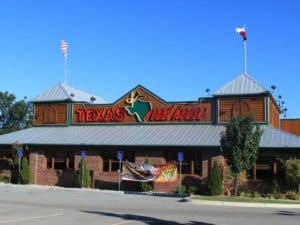
Living in Texas means being aware of several unwritten rules that most people are familiar with. If you want to blend in and keep things smooth, you’ll need to develop these everyday habits.
These go way past saying “y’all” or throwing on a pair of cowboy boots. It’s about how you treat folks, what you bring to a potluck, and, yeah, how you eat barbecue without offending anyone.
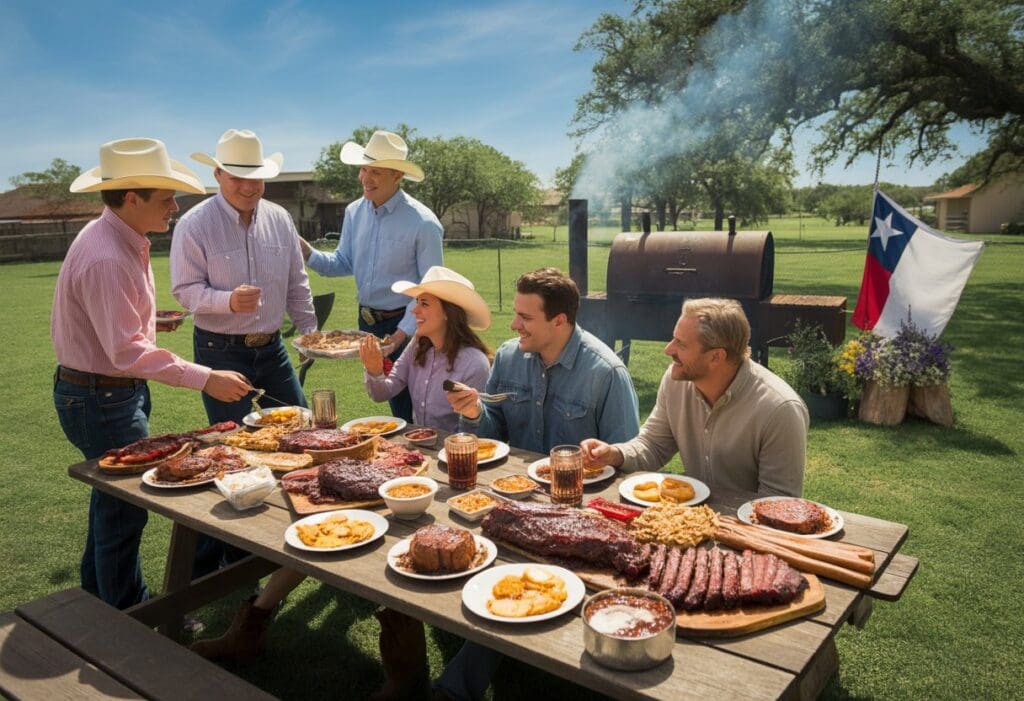
After years of watching what gets a nod or an eye roll around here, I’ve learned the little stuff matters. Whether you’re new in town or want to avoid sticking out, these unwritten rules make life easier.
Being polite, respecting local food traditions, and adapting to local manners can save you from some truly awkward situations. Let’s dive into what every Texan expects, especially when it comes to that sacred Texas barbecue.
The Heart of Texas Etiquette: Respecting BBQ Tradition
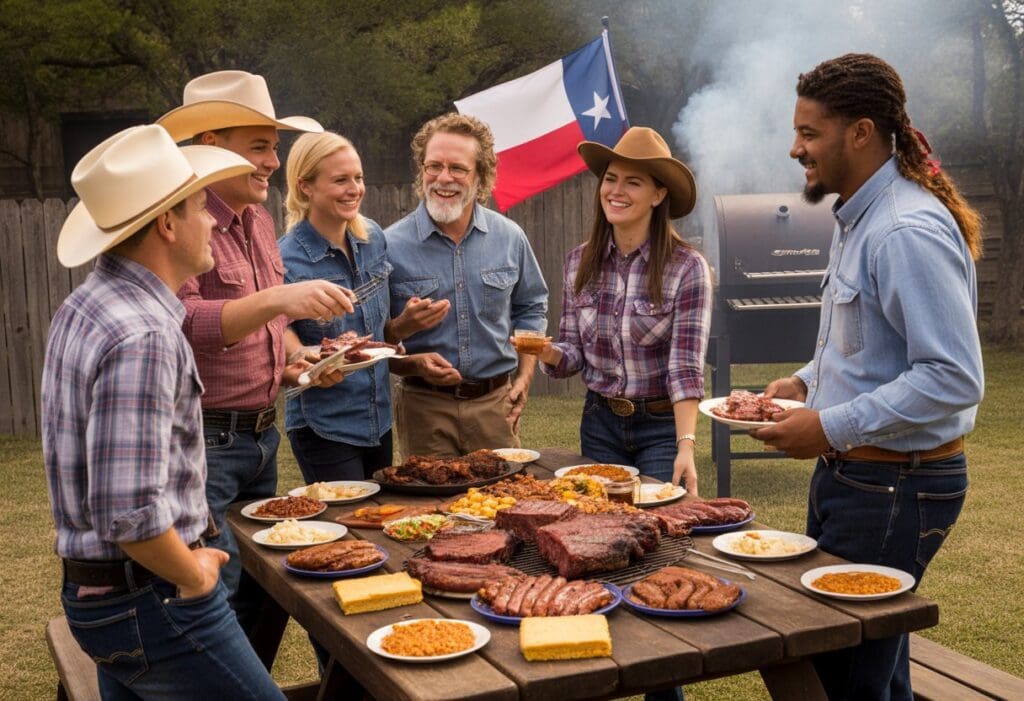
In Texas, BBQ isn’t just food—it’s a point of pride and a reason for folks to gather. If you show up at a Texas BBQ, you’re stepping into a tradition that runs deep.
BBQ Etiquette and Unspoken Customs
When I hit a Texas BBQ, I always thank the pitmaster. They’re the primary host and take pride in their work.
I don’t hover around the grill or offer cooking advice unless someone asks. That’s just asking for trouble. Waiting in line is part of the deal. I stay patient, don’t cut, and keep things friendly.
When it’s time to eat, I grab a fair helping so there’s enough for everyone—bragging about BBQ from somewhere else or showing up with a bottle of store-bought sauce? Not a good look.
If I’m a guest, I help clean up—clearing plates, picking up trash, whatever’s needed. Nobody likes a freeloader. Clean hands and clean plates are just basic respect.
Regional BBQ Styles and Pride
Texas is massive, and the BBQ changes with the landscape. In Central Texas, it’s all about simple beef brisket with salt, pepper, and post oak smoke.
East Texas BBQ specializes in slow-cooked, saucy, fall-off-the-bone meats, typically pork. Down south, I find mesquite wood and spicy marinades.
West Texas? That’s “cowboy style,” cooked over open flames. Every region has its flavor, and people are fiercely loyal to their local style.
If I’m traveling, I try the local stuff and ask questions instead of picking favorites. People appreciate curiosity more than criticism. There’s a lot of pride tied up in BBQ here, and it’s smart to respect that.
The Meaning Behind ‘Don’t Mess with Texas’
“Don’t Mess with Texas” originated as a campaign to reduce littering, but it now holds much greater significance. Around BBQ, it’s a warning—don’t mess with the food, the line, or the way things are done.
Cutting in line, disrespecting the style, or bringing your sauce will get you side-eye fast. Everyone’s proud of their BBQ, and it’s just good manners to show respect.
Greetings and Everyday Courtesies
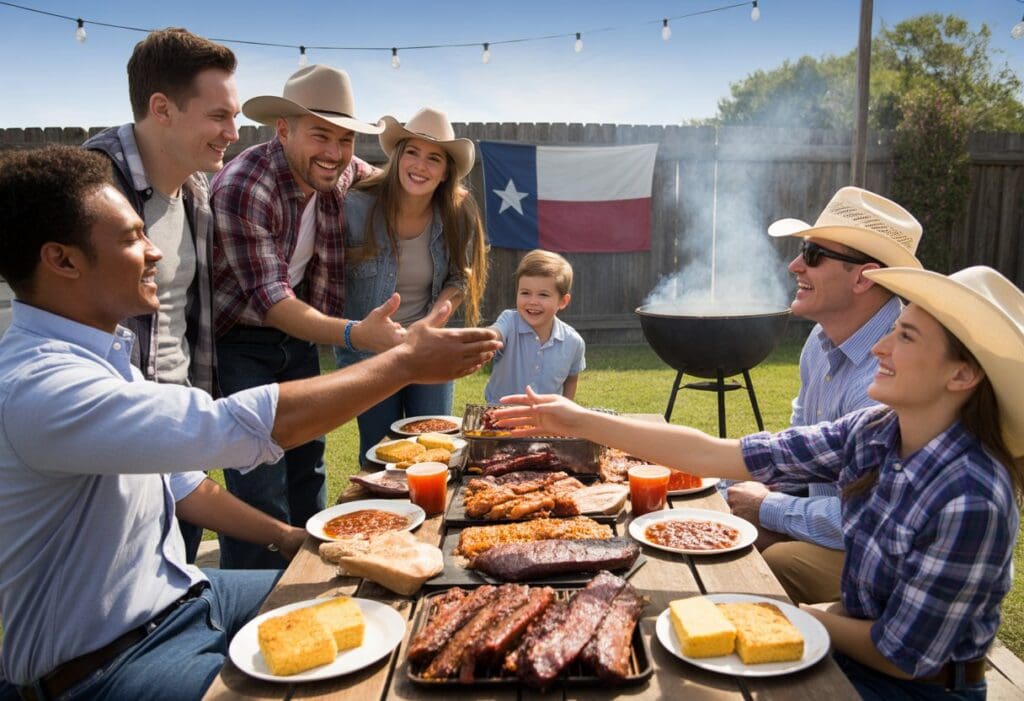
Respect in Texas begins with how you greet someone. The way you greet folks says a lot about who you are.
Proper Use of ‘Howdy’ and ‘Y’all’
“Howdy” is a go-to greeting here. It’s laid-back, yet it makes people feel like they belong.
I use “howdy” at the grocery store or when meeting a neighbor. It fits pretty much anywhere.
“Y’all” isn’t just a Texas accent—it’s a way to include everyone. I use it instead of “you guys” or “everyone.”
It’s one of those words that makes people feel welcome. If you want to sound like you’re from here, “y’all” is your friend.
Warm Handshakes and Eye Contact
A good handshake matters. I keep it firm, but not bone-crushing. When I shake hands, I look people in the eye. That shows I’m paying attention and respect them.
This holds especially true in business or first-time meetings. I take my time and don’t look distracted.
Even with younger folks, a handshake says I care about tradition. It’s a small thing, but it makes a difference.
Politeness in Conversation
Politeness isn’t old-fashioned here—it’s expected. I say “please,” “thank you,” “ma’am,” and “sir” all the time. People notice when you use good manners. I don’t talk over others or brag too much.
If I need to change the subject, I do it gently. Nobody likes to feel ignored. I make sure everyone’s included in the conversation. Leaving people out feels wrong.
Good table manners and friendly small talk go a long way. For more, I check out these etiquette tips.
Mastering Texan Language and Slang
The way people talk in Texas is a big part of fitting in. The slang, the accent, and the little expressions make this place unique.
Common Texas Slang Terms
Texan slang pops up everywhere. “Y’all” means more than one person, and “all y’all” means everyone in the room.
If I say I’m “fixin’ to,” I’m about to do something, not fixing anything. “Bless your heart” sounds nice, but sometimes it’s just polite for “that was dumb.”
“Skeeters” are mosquitoes, and “Jeetyet?” means “Did you eat yet?” When someone asks for a “Coke,” it could mean any soft drink, not just Coca-Cola.
Popular Texas Slang at a Glance
| Slang | Meaning |
|---|---|
| Y’all / All y’all | You all / All of you |
| Fixin’ to | About to |
| Bless your heart | Sympathy or sarcasm |
| Skeeters | Mosquitoes |
| Coke | Any soft drink |
| Jeetyet? | Did you eat yet? |
Regional Phrases and Expressions
Texan expressions are colorful and sometimes a bit odd. “Over yonder” means over there.
If someone’s “bowed up,” they’re ready for a fight or just being stubborn. Nobody says “mosquito”—it’s always “skeeter.”
Big trucks are “18-wheelers,” and the fridge is the “icebox.” Store names change, too—“Dollar General” might turn into “General Dollar.”
The Texas Accent Explained
The Texas accent is its own thing. Vowels stretch out, and word endings drop off.
“Night” sounds like “naht,” and “I’m” comes out as “Ah’m.” Texans blend words, so “Did you eat yet?” becomes “Jeetyet?” in a blink.
Some words get their twist—“barbed wire” is “bob wahr,” and “wash” turns into “warsh.” The accent feels friendly, not harsh.
I hear extra syllables in simple words, and it gives the language a laid-back rhythm. Picking up on the accent helps me fit in and shows I care about the local vibe.
Hospitality and Community in the Lone Star State
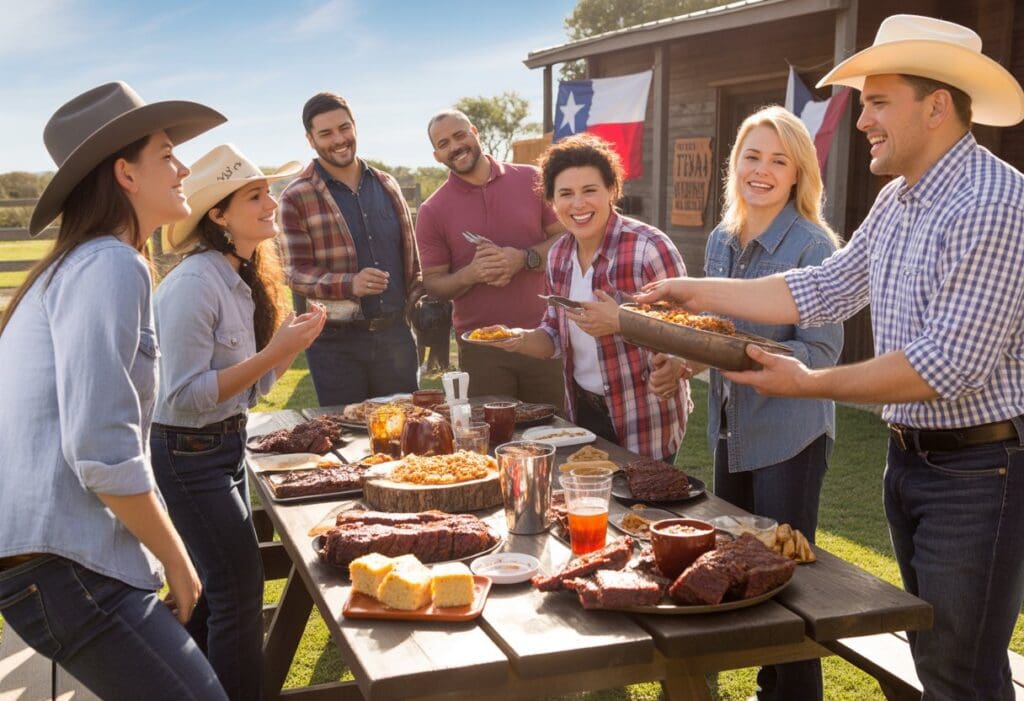
Texas is famous for its welcoming spirit. I view hospitality as an integral part of what it means to be Texan.
Southern Hospitality Fundamentals
Here, “southern hospitality” means greeting people with warmt, —even strangers. I make eye contact, smile, and use “sir” or “ma’am” when I talk.
“Y’all” is my go-to for making groups feel included. Politeness isn’t optional—holding doors, offering a seat, and saying please or thank you are just part of life.
If I invite someone over, I always offer food or something to drink. Letting a guest leave hungry? That’s just not done.
Helping Neighbors and Strangers
Helping others is a big part of what makes Texas special to me. If my neighbor is moving or having trouble, I go over and lend a hand.
This isn’t just expected—it’s a point of pride among Texans. During tough times, such as storms or power outages, strangers often offer shelter, supplies, or a ride.
I’ve seen this sense of community in both big cities and small towns. Lending tools, carrying groceries, or checking on elderly neighbors are simple ways I show I care.
At local BBQs or church events, people from diverse backgrounds gather to eat, socialize, and share stories. No matter where I travel in Texas, I find that helping hands and friendly faces are readily available.
Mind Your Manners at Social Gatherings
Texans take pride in showing respect and friendliness at every get-together. From backyard BBQs to holiday dinners, I know that good manners and thoughtful actions make everyone feel welcome.
Potlucks, BBQs, and Family Events
In Texas, it’s expected to contribute when invited to a potluck or BBQ. I always ask the host what I can bring.
Even if they say I don’t need to, I still show up with something—maybe a dessert, drinks, or ice. Bringing a dish feels right and shows appreciation.
When BBQ is being served, I don’t cut in line. Texans care about fairness, especially when it comes to food.
I wait my turn and don’t pile my plate too high on the first round, making sure there’s enough for everyone. If someone spent all day smoking brisket, I would compliment their hard work.
In Texas, BBQ is almost sacred, and the pitmaster deserves thanks. After eating, I help with cleanup, such as gathering plates or taking out the trash.
Even if my offer is refused, it’s still good manners to ask.
Respecting Personal Space and Boundaries
Texans are warm but do value personal space, especially in larger gatherings. When talking to someone, I avoid getting too close, keeping at least an arm’s length between us.
Hugging and handshakes are common, but I pay attention to body language—some folks prefer just a handshake or a wave. I avoid asking personal questions about money, politics, or family planning.
In the Lone Star State, these topics can be touchy, especially among people I don’t know well. I stick to friendly issues like sports, the weather, or local news.
If children are at the event, I watch my language and behavior. Respecting others’ kids is important across Texas, and I never discipline someone else’s child.
Navigating Texas Life: Roads, Weather, and Everyday Living
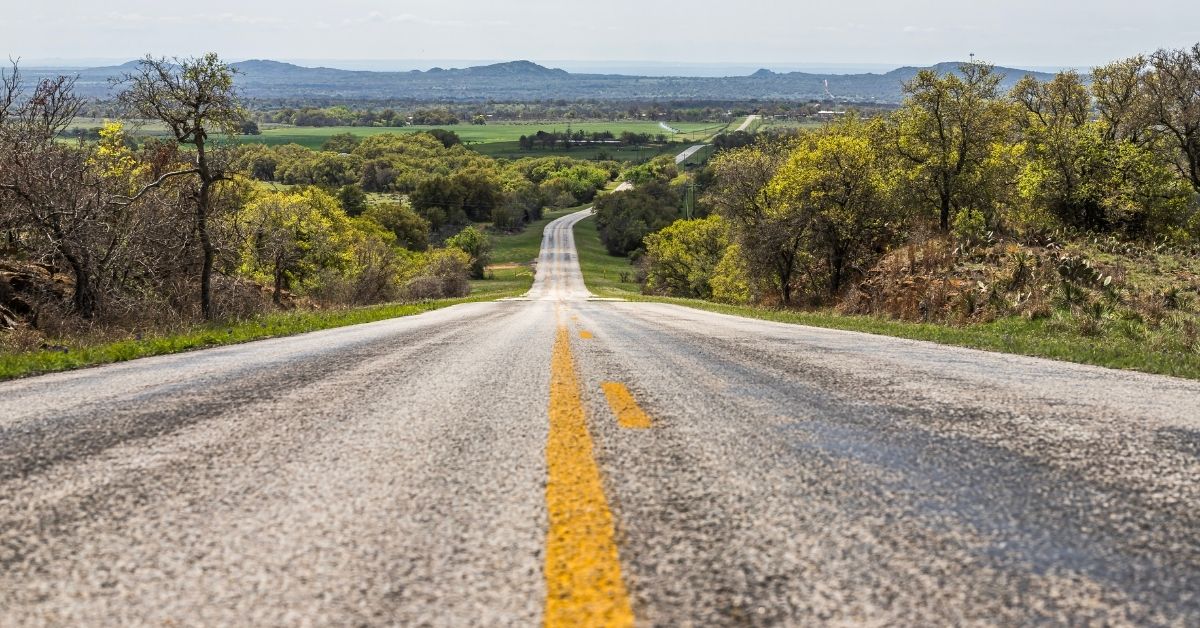
Living in Texas means adjusting to busy highways, unpredictable weather, and a unique rhythm of daily routines. Respecting these unwritten ways helps me get along smoothly with both longtime locals and newcomers.
Unwritten Rules of the Road
When I drive in Texas, I always remember that the left lane on highways is for passing, not cruising. Staying in the left lane while driving slowly can be frustrating for other drivers, so I move over once I’ve passed slower traffic.
I never forget to use my turn signal—even for lane changes. Not everyone does, but the safest drivers always signal first.
In rural areas, if someone comes up behind me quickly, especially “over yonder” on a country road, I pull onto the shoulder and let them pass if traffic allows. Texans often give a “courtesy wave” after another driver lets them merge in.
I make sure to do this because it’s just polite. Parking lots can be busy, so I park straight and avoid taking up more than one spot. When I see someone with their blinker on, waiting for a space, I don’t cut in and take it.
Dealing with Texas Weather
Texas weather can shift quickly, so I always check the forecast before leaving home. Hot summers are common, and I make sure to wear light clothes, use sunscreen, and stay hydrated.
I keep water in my car, especially if I’m heading out for a drive. Spring and summer often bring severe storms, sometimes with hail or even tornado warnings.
If I’m on the road and see water over the pavement, I never try to drive through it. Flooded roads are dangerous here.
When a cold front hits, it can drop temperatures by thirty degrees in a day. I’ve learned to dress in layers and keep a jacket handy, even if it was hot earlier.
Quick weather changes are just part of Texas life.
Everyday Texan Routines
Life in Texas tends to start early. People want to get things done before the sun really starts to cook.
I’ll spot neighbors out with their dogs or watering the grass just after sunrise. “Howdy” and a quick chat feel almost automatic, even if you’ve never met the person before.
At the grocery store, I hold the door for someone or toss a nod their way. I try not to clog up the aisles, and if someone looks hurried, I’ll wave them ahead.
People around here often say “yes, sir” or “no, ma’am.” That politeness isn’t just for show—it’s the way things have always been.
Weekends roll around, and you’ll probably find folks firing up the grill or gathering outside. Respecting each other’s space at parks or pools seems right.
Directions can get a little funny. Someone might say a place is “over yonder,” which could mean down the street or half an hour away. You learn to roll with it.

Christian Linden is a seasoned writer and contributor at Texas View, local Texas resident, travel enthusiast.and author of the Home Energy Playbook. He specializes in topics that resonate with the Texan community. With over a decade of experience in journalism, Christian brings a wealth of knowledge in local politics, culture, and lifestyle. When he's not writing, Christian enjoys spending weekends traveling across Texas with his family, exploring everything from bustling cities to serene landscapes.