In Texas, electricity choices allow consumers to select their providers in a deregulated market. ERCOT manages the electric grid, ensuring supply meets demand and facilitating competition among multiple providers, enhancing consumer options and potentially lowering costs.
Did you know that Texans can choose from over 100 electricity providers? In a state where our independence is a point of pride, having the power to select your electric company stands out as a true expression of freedom. Many folks know they can shop for plans, but few really understand the ins and outs of our deregulated energy market.
Choosing the right plan isn’t just about saving a few bucks; it’s about finding what fits your unique lifestyle. With a variety of options available, Texans can tailor their energy choices like never before. Here’s how it works, and what it means for Texans today.

ERCOT, the Electric Reliability Council of Texas, choreographs how electricity gets balanced and delivered to my place. Power plants generate the power, ERCOT keeps it flowing, and then various companies compete for my business by offering different rates and plans. All these moving pieces hit my wallet and the service I get, especially when the weather goes haywire or everybody’s cranking up the AC.
- Challenges in the Texas Electricity Market
- What Is the Texas Electricity Market?
- Role of ERCOT in Texas
- Deregulation and Its Impact
- Retail Electricity Providers in Texas
- Transmission and Distribution Utilities
- How Electricity Flows: Generation to Delivery
- Understanding Pricing and Energy Costs
- The Impact of Winter Storm Uri
- Renewable Energy in the Texas Market
- Frequently Asked Questions
Challenges in the Texas Electricity Market
| Challenge | Description |
|---|---|
| Market Volatility | Fluctuating prices can affect consumers and providers |
| Regulatory Issues | Navigating complex regulations and market rules |
| Infrastructure Needs | Upgrading and maintaining the electric grid |
| Weather Impact | Extreme weather can strain the electricity supply |
What Is the Texas Electricity Market?
In Texas, the electricity market works like a big, open marketplace. Private companies run the power plants and sell electricity, while a single transmission operator keeps the grid humming. Most Texans get to pick which retail electricity provider they want and can shop around for plans that suit them.
Key Participants and Structure
The whole setup involves a handful of big players. Private companies generate electricity from a wide range of sources, including natural gas, coal, nuclear, wind, solar, and more. These are the generators.
Transmission and distribution utilities (TDUs) own all the poles and wires, moving electricity from power plants to homes and businesses. They don’t sell power directly to me; they make sure it gets where it needs to go.
Retail electricity providers (REPs) buy power from generators and then sell it to folks like me. I can choose a REP, compare rates, and find plans that fit my budget or habits, like the deal finder site Compare Power.
ERCOT manages the entire grid, making sure supply matches demand for about 26 million Texans. The Public Utility Commission of Texas (PUCT) sets the rules and tries to keep everything fair.
Key Players in the Texas Electricity Market
| Player Type | Description |
|---|---|
| Retail Electric Providers (REPs) | Companies that sell electricity to consumers |
| Generators | Companies that produce electricity |
| Transmission and Distribution Utilities (TDUs) | Entities that deliver electricity to consumers |
| Consumers | Residential, commercial, and industrial users |
Scope of Deregulation
Texas is pretty famous for its deregulated electricity market. Here, I’m not stuck with just one power company based on my zip code. Instead, most regions let me pick from a bunch of retail electricity providers, each with their rates, contract terms, and sometimes weird little perks.
About 85% of the state runs on this competitive model. Some spots, usually cities with their own utilities or rural co-ops, still stick to the old regulated way, so choices get a bit thin out there.
For me, deregulation means I can hunt for better pricing and plans that match how I use electricity. Of course, it also means I have to pay attention to the fine print and keep an eye on rate changes.
Texas vs. Other Electricity Markets
Honestly, Texas doesn’t handle electricity the way most other states do. In many places, a single utility handles everything, generating, delivering, and selling the power. Folks there usually pay whatever rate that company sets, and that’s that.
Texas operates an “energy-only” wholesale market, meaning power plants are paid for the actual electricity they generate, not just for being on standby. That’s not how it works in many other states, where generators might get paid just to be ready if needed.
And here’s the kicker: ERCOT operates almost entirely inside Texas, barely connecting to other states’ grids. That independence gives us more control (for better or worse), but it also means Texas has to handle its supply and demand.
Role of ERCOT in Texas
ERCOT keeps electricity moving across most of Texas. Its work shapes how energy gets delivered, who’s in charge, and why Texas’s grid doesn’t look like what you’ll find elsewhere.
What Is ERCOT?
The Electric Reliability Council of Texas (ERCOT) is a nonprofit that manages electricity for nearly 26 million Texans, roughly 90% of the state’s electric load. I see ERCOT as the traffic cop for electricity, directing the flow and running the market where power gets bought and sold.
Texas operates as a loner here, running its grid, while most other states tie into bigger regional networks. So, ERCOT doesn’t answer to federal rules the way other grid operators do. It’s been at this since the 1970s, but its job got a lot bigger in the ‘90s when Texas opened the market to competition.
Overview of ERCOT
| Aspect | Description |
|---|---|
| Full Name | Electric Reliability Council of Texas |
| Established | 1970 |
| Function | Manages the electric grid in Texas |
| Members | Power generators, transmission owners, and retail electric providers |
| Market Type | Competitive wholesale electricity market |
Responsibilities of the Electric Reliability Council of Texas
ERCOT’s main gig is keeping the grid up and running. It constantly balances electricity supply and demand, telling generators when to ramp up or slow down. I count on ERCOT to manage the high-voltage network, sort out repairs, and jump into action during emergencies.
It also runs the wholesale electricity market, where companies compete to sell power. ERCOT acts as a referee, setting trading rules, tracking deals, and handling payments between generators and providers.
The group must ensure there’s enough backup power for those brutal summer afternoons, winter freezes, or surprise breakdowns.
Grid Management and Independence
ERCOT operates the only central electric grid that’s almost entirely inside a single state, Texas. This gives us a unique kind of independence from the rest of the country. I think that matters because the grid doesn’t fall under federal agencies like the Federal Energy Regulatory Commission.
This setup allows for a deregulated market, enabling me to choose my provider. ERCOT coordinates between power plants, the wires, and local utilities to keep supply and demand in check, minute by minute.
The whole grid runs as one big system, whether it’s a heatwave, a hurricane, or a sudden spike in usage.
Deregulation and Its Impact
Deregulation has completely transformed how electricity is bought and sold in Texas. Suddenly, customers got more choices, energy companies had to play by new rules, and the market turned into a real battleground.
Power Deregulation in Texas
| Region | Deregulated | Notes |
|---|---|---|
| Houston | Yes | Major city with multiple retail electricity providers. |
| Dallas | Yes | Consumers can choose from various REPs. |
| San Antonio | Yes | CPS Energy is the main utility but offers choices. |
| Austin | Yes | City-owned utility with competitive options. |
| Fort Worth | Yes | Deregulated market available. |
| El Paso | Yes | Competitive market with several providers. |
| Lubbock | No | Lubbock Power & Light is the local utility. |
| Beaumont | No | Local utility provides electricity directly. |
| rural areas | No | Many rural co-ops maintain regulated systems. |
| Brownsville | No | Brownsville Public Utilities Board serves customers directly. |
History and Legislative Background
Texas began electricity market deregulation in 2002 with Senate Bill 7, allowing most Texans to choose their power suppliers. ERCOT now manages the grid, while retail electricity providers (REPs) sell directly to consumers. Some areas remain regulated, but major cities like Houston and Dallas are deregulated, offering more choices and competitive pricing.
Benefits for Consumers
Deregulation enables consumers to compare various REPs, select fixed or variable plans, and choose green energy options. Companies compete for customers by lowering prices and enhancing services, often providing apps for usage tracking. However, navigating the market can be complex due to numerous plans and fluctuating prices.
Effects on Competition
Deregulation has intensified competition among REPs in Texas, leading to diverse plans focused on price, service, and green energy. While consumers benefit from more options, price volatility can occur, especially during high demand. Consumers must carefully evaluate contracts, as some REPs may raise rates after an initial low period, placing the onus on them to make informed choices.
Retail Electricity Providers in Texas
Retail electricity providers (REPs) play a significant role in Texas’s deregulated market. They all pitch different plans, prices, and perks. Figuring out how REPs work helps me make a choice that fits my home or business, though it’s not always as simple as it sounds.
What Are Retail Electricity Providers?
Retail electricity providers (REPs) in Texas sell electricity but do not own the power lines. They purchase electricity from generation companies and arrange delivery through local utilities. REPs manage accounts, send bills, and answer questions, but utilities handle repairs.
In Texas’s deregulated market, consumers can choose from over 70 REPs, comparing prices and services to find the best fit.
Types of Plans Offered
REPs offer fixed-rate, variable-rate, and prepaid plans. Fixed-rate plans lock in prices, providing budget stability, while variable-rate plans fluctuate with the market. Prepaid plans allow upfront payments without credit checks, and some REPs offer green energy options.
How REPs Compete
REPs compete with lower rates, sign-up bonuses, and various incentives, including renewable energy and smart home bundles. Consumers can research options online, using review sites and the state’s Power to Choose page to find the best deals. Not all REPs are equal, so reading contracts carefully is essential.
Transmission and Distribution Utilities
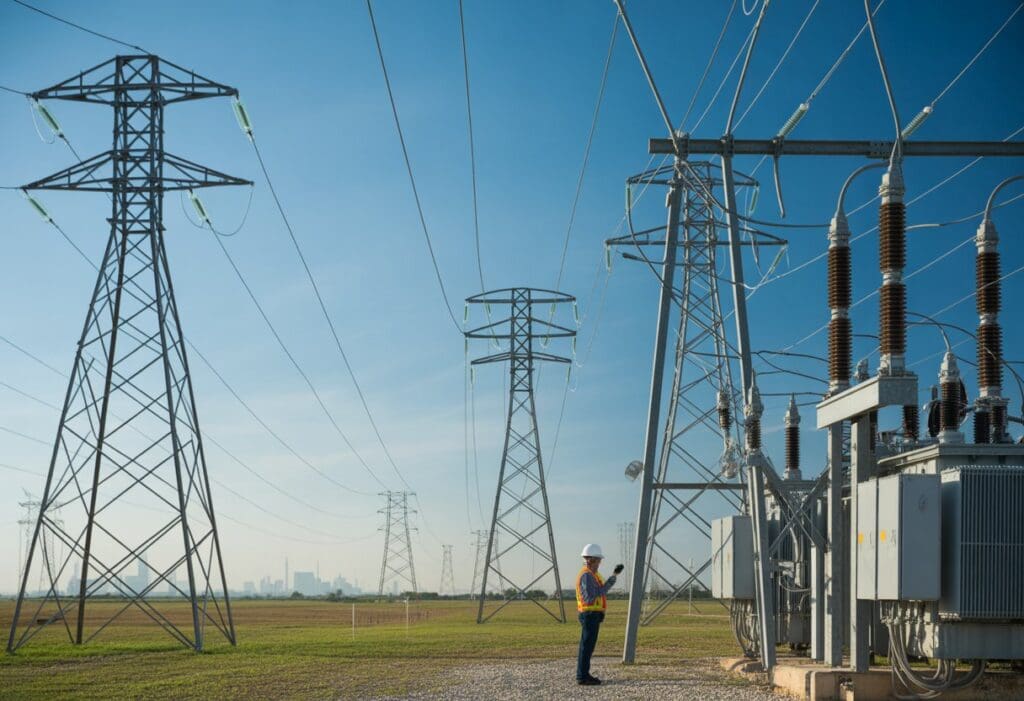
Transmission and Distribution Utilities (TDUs), sometimes called Transmission and Distribution Service Providers (TDSPs), own and maintain the wires, poles, substations, and transformers that transport electricity from power plants to homes and businesses. They handle the infrastructure that keeps the lights on across Texas, making sure everything runs safely and reliably.
Role of TDUs and TDSPs
TDUs and TDSPs take care of the hardware that delivers electricity. That means the high-voltage lines stretching across the countryside, the substations, the transformers, and the poles on my street. They handle both the long-distance transmission and the local distribution, so electricity gets where it needs to go.
My REP might be different from my neighbor’s, but our address sets the TDU for our area. TDUs don’t sell me a plan or set my rate; they keep the grid healthy, fix things after storms, and handle regular maintenance. When there’s an outage, my TDU is the one to call, no matter which REP I picked.
Major Utilities in Texas
Five big TDUs cover most of Texas, each with its turf:
- AEP Texas Central
- AEP Texas North
- CenterPoint Energy
- Oncor Electric Delivery
- Texas-New Mexico Power
They’re assigned by ZIP code and city, so I don’t get to choose; my TDU is just part of living where I do. For example, Oncor operates in the Dallas-Fort Worth area, while CenterPoint serves the Houston area. My bill always includes charges from both my REP and my TDU.
| TDU Name | Region/Area Covered |
|---|---|
| AEP Texas Central | South and Central Texas |
| AEP Texas North | West and North Texas |
| CenterPoint Energy | Houston and nearby areas |
| Oncor Electric Delivery | Dallas-Fort Worth, North Central |
| Texas-New Mexico Power | Small areas across Texas |
Services Provided to Consumers
TDUs handle everything that keeps the electricity flowing, including maintenance, repairs, upgrades, and restoring power after a storm. They also install new meters and read them for billing. Everyone in the same TDU area pays the exact delivery charges, which regulators set and REPs add to my bill.
How Electricity Flows: Generation to Delivery
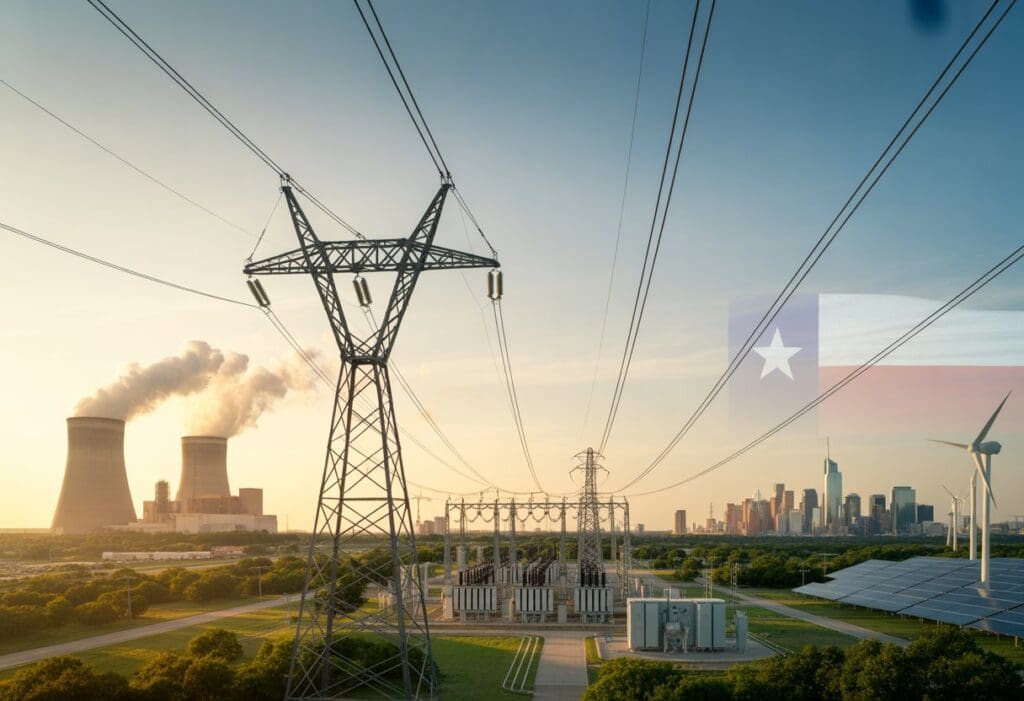
Electricity’s journey through Texas isn’t exactly simple. It starts at the power plant and ends at my wall socket, with a few stops and plenty of moving parts along the way. Different organizations keep each stage running so the lights stay on.
Power Generation Sources
Texas sources its electricity from natural gas, wind, coal, solar, and some nuclear energy, with wind leading the nation in production. ERCOT monitors about 90% of the state’s load, ensuring a balanced supply. While natural gas dominates, renewable energy is rapidly growing, especially during peak demand.
Electricity Transmission
Electricity travels through high-voltage transmission lines from power plants to substations. ERCOT oversees over 46,500 miles of transmission lines, managing real-time flow to prevent blackouts. Texas operates independently from other states, allowing local control during emergencies.
Distribution to Homes and Businesses
Once electricity reaches a substation, Transmission and Distribution Utilities (TDUs) reduce voltage and deliver it to homes and businesses. TDUs handle repairs and maintenance, while Retail Electricity Providers (REPs) manage billing and customer service. This structure fosters competition among REPs while ensuring reliable delivery.

Understanding Pricing and Energy Costs
Texas electricity pricing is complex due to deregulation, regional factors, and unpredictable weather. Competition and events like storms influence costs.
Factors Influencing Energy Costs
Bills fluctuate based on supply and demand; high AC usage can spike prices. Texas relies on natural gas, wind, coal, and solar, so rising natural gas prices or low wind can increase costs. Weather events and grid upgrades also affect bills. ERCOT and the Public Utility Commission regulate prices to ensure fairness.
Wholesale vs. Retail Pricing
Generators set wholesale prices based on market conditions, which fluctuate throughout the day. Retail Electric Providers (REPs) purchase electricity at wholesale and add delivery and overhead costs, reflected in fixed or variable rate plans for consumers.
My bill usually breaks down into four main parts worth checking:
- Energy charge (what I use)
- Transmission and distribution (getting the power to my place)
- Taxes and fees
- Other charges (late fees, connection charges, you name it)
Price Volatility and Consumer Protection
Texas electricity prices can swing fast. Sudden demand, grid failures, or big storms sometimes send rates through the roof. Remember that crazy winter storm? Some folks got hit with bills that went up by hundreds of dollars in just a day.
To avoid getting hammered by those spikes, most providers offer fixed-rate plans. I can lock in my price for the whole contract and not worry about wild increases. Variable-rate plans let rates move up or down every month, which makes my bill a bit of a gamble.
State rules require clear contracts and honest billing, and the Public Utility Commission of Texas keeps an eye on things so companies don’t take advantage.

The Impact of Winter Storm Uri
When Winter Storm Uri hit in February 2021, the Texas electricity market got a brutal wake-up call. Millions lost power for days on end, and prices hit record highs. That disaster forced lawmakers and regulators to scramble and fix some glaring problems with the grid.
Market Stress and Reliability Challenges
Uri brought bitter cold, ice, and snow. Power plants, natural gas, coal, wind, and even nuclear started failing left and right. Equipment froze up, fuel deliveries stalled, and suddenly, there just wasn’t enough electricity to go around.
ERCOT, the group that runs most of Texas’s electric grid, stepped in and ordered rolling blackouts to keep the whole system from collapsing. Those blackouts didn’t save everyone; millions shivered in the dark, sometimes for four days. At least 246 deaths have been linked to the power outages, as people tried to survive freezing homes.
The storm made it painfully obvious how vulnerable the grid can be, especially without enough backup and real winter prep. Being poorly connected to other states meant Texas couldn’t get much outside help, either.
Effects on Energy Pricing
As supply collapsed, wholesale power prices in Texas shot up to the legal max, $9,000 per megawatt-hour. Some rates stayed pegged there for days, leaving utilities and anyone on variable plans with eye-watering bills.
The state’s energy market lost billions. Households with indexed or variable plans got especially hard hit, and both retail providers and customers felt the pain.
Here’s a quick snapshot of those price swings:
| Before Uri | During Uri | After Uri |
|---|---|---|
| $30–$60 per MWh | $9,000 per MWh (market cap) | Settled at lower, stable rate |
Regulatory Responses
After Uri, lawmakers moved fast. They passed new laws to make the grid more reliable and better prepared for extreme weather. ERCOT faced new regulations, and power companies had to step up winterization efforts.
The state gave the Public Utility Commission more authority and put stricter rules in place for electric utilities. The Legislature also tweaked energy pricing rules and how the market operates to avoid another financial mess. The goal is to ensure that both generators and regulators perform their intended functions.

Renewable Energy in the Texas Market
Texas is a leader in wind and solar energy, significantly changing electricity generation. This growth has enhanced clean energy output but also introduced challenges in grid management and reliability.
Growth of Wind and Solar
Texas has added over 58,000 megawatts of renewable energy in five years, primarily from wind and solar, making ERCOT essential for over 26 million residents. The state exceeded its 10,000-megawatt renewable target in 2011, continuing to expand clean energy options.
Integration Challenges
Integrating renewables is complex due to their unpredictability, which can lead to price fluctuations. ERCOT balances supply by incorporating gas plants and traditional sources, while upgrades and better storage tech are required for reliability.
Future Trends
In the coming years, renewables could represent 98% of new electricity generation. Texas is investing in reliability and exploring green hydrogen as a clean fuel source, but the grid’s adaptability to variable conditions remains a concern.
Future Outlook for the Texas Electricity Market
Electricity demand is projected to double by 2050 due to population growth and new industries. This will require significant investments in power generation, primarily from natural gas and renewables.
Evolving Regulatory Landscape
ERCOT operates an energy-only market, which raises concerns about adequate investment in dispatchable generation. Ongoing legislative debates may affect reliability and pricing stability.
Technological Innovations
Advancements in solar, wind, and battery technologies are reshaping the market. Innovations like carbon capture and smart meters help meet emissions regulations and improve energy management.

⚡ Check Texas Energy Rates
Enter your ZIP code to see lowest electricity rates in Texas


Frequently Asked Questions

Christian Linden is a seasoned writer and contributor at Texas View, local Texas resident, travel enthusiast.and author of the Home Energy Playbook. He specializes in topics that resonate with the Texan community. With over a decade of experience in journalism, Christian brings a wealth of knowledge in local politics, culture, and lifestyle. When he's not writing, Christian enjoys spending weekends traveling across Texas with his family, exploring everything from bustling cities to serene landscapes.