Camping in Texas means everything from quiet tent spots under the stars to full-on RV parks with all the creature comforts. I want to help you pick the right places, pack what you need, and have a trip that feels like an adventure.
Whether you’re a total beginner or you’ve been at this for years, Texas has something for every kind of camper.
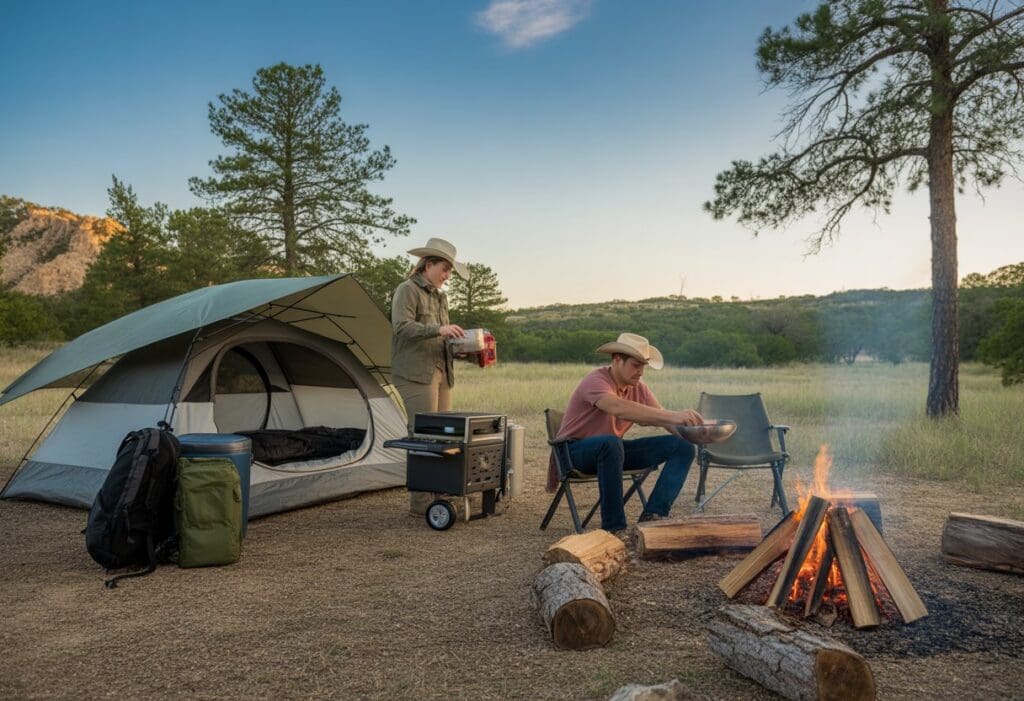
I’ll walk you through state parks, dispersed camping, and even glamping. You’ll get a sense of which spots fit your plans, what’s worth bringing, and how to enjoy your time in the Lone Star State.
Top Texas Camping Destinations
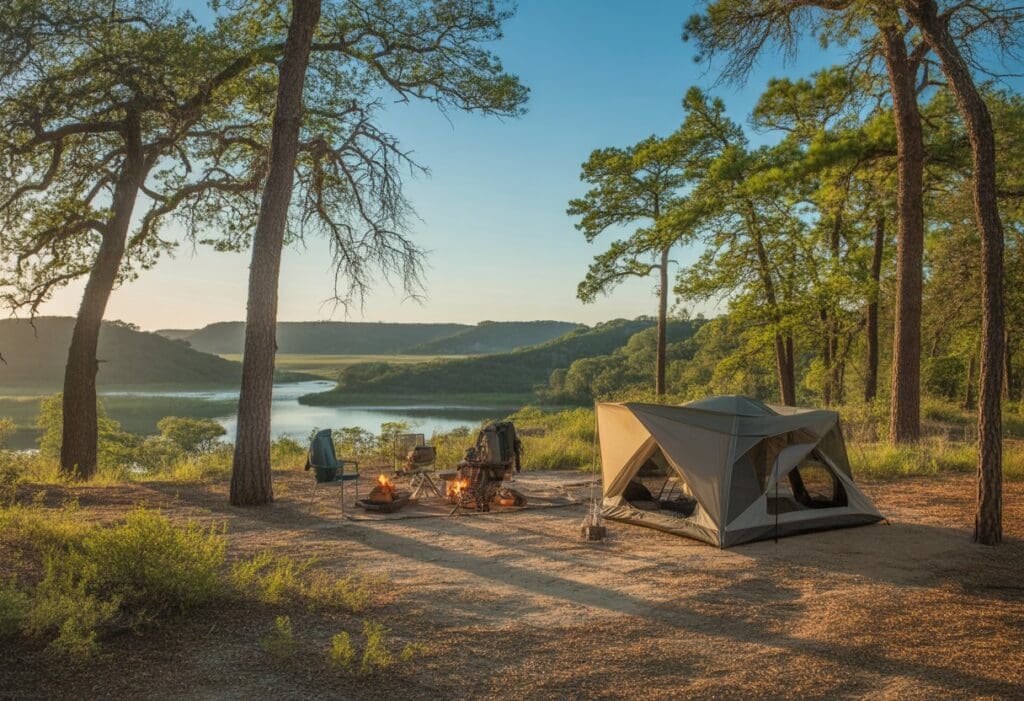
Texas is packed with places to camp—think green hills, rocky canyons, and even stretches of sandy beach. There’s something for everyone, whether you want a challenge or just a comfy spot to relax.
Texas State Parks Overview
When I head to Texas state parks, I know I’ll find clean campsites, marked trails, and actual bathrooms. Enchanted Rock State Natural Area, Garner State Park, and Palo Duro Canyon State Park are some of my favorites.
Most parks offer both tent and RV sites, and many have cabins for those who prefer a roof over their heads. There’s fishing, hiking, birding, or just hanging out by a fire—take your pick.
Camping doesn’t usually break the bank, especially if you grab a Texas State Parks Pass. That pass rays off if you go often.
Rangers sometimes lead guided hikes or nature talks, which I think makes visits more interesting. If you want a spot during spring or fall, book early—these parks fill up fast.
Each place has its unique vibe, such as the red rocks at Palo Duro or the glassy waters at Inks Lake. The scenery sticks with you.
Best Camping in the Hill Country
The Hill Country is all about rolling hills, wildflowers, and rivers that wind around like crazy. I always find great camping at Pedernales Falls State Park, Lost Maples State Natural Area, and Guadalupe River State Park.
At Pedernales Falls, I can swim, scramble over rocks, or sit and watch the river. Lost Maples is a must-see in fall, when the maples turn every shade of red and orange.
Guadalupe River State Park is ideal for tubing, swimming, or simply relaxing in the shade. The campgrounds are family-friendly, with picnic tables and even playgrounds.
Many of these sites are located near small towns such as Fredericksburg or Wimberley. It’s nice to grab a bite or some supplies if you need them.
Spring brings bluebonnets everywhere, and summer is all about finding a sound swimming hole. There’s always something to do.
Exploring Big Bend Ranch State Park
Big Bend Ranch State Park is located in the remote west Texas. Region: It’s the biggest state park in Texas, and you feel the space out there.
I can set up camp under mountain peaks or next to the Rio Grande, and it feels like you’ve stepped off the grid. The park is a dark-sky area, so the stargazing is unreal.
There are three main campgrounds with the basics, plus a bunch of primitive spots if you’re after solitude. It’s remote, so I always bring more water than I think I’ll need—summers get brutal, and services are limited.
Hiking, biking, horseback riding, and paddling the river are all big draws. Wildlife shows up a lot – javelinas, deer, and birds are part of the scene.
Padre Island National Seashore Adventures
Padre Island National Seashore is a long, wild stretch of barrier island. I can camp right on the Gulf, or pick a developed site with showers if I want a few more amenities.
Beach camping is simple—no hookups, just sand and ocean. Falling asleep to the waves is one of my favorite things.
Fishing, beachcombing, and windsurfing keep me busy. If I’m lucky, I might spot sea turtles nesting during the right season.
The park has rules to protect wildlife, so I check where fires are allowed and always pack out my trash. They let you bring dogs, which is a bonus if you camp with pets.
Some access roads get sandy—worth checking conditions before you drive out.
Choosing the Right Texas Park for Your Trip
Choosing a Texas park depends on what you want to get out of your trip. Every park has its unique personality, featuring distinct campsites and amenities.
Popular Park Types and Features
Texas parks come in all flavors. I usually pick from these:
State Parks and Natural Areas: Rivers, lakes, forests—take Garner State Park with its Frio River and hiking, or Enchanted Rock for that giant pink granite dome. It’s a hiker’s dream.
Coastal and Beach Parks: Padre Island National Seashore and Galveston Island State Park put you right on the sand. If I’m craving ocean air or birdwatching, these are my go-tos.
Mountain and Canyon Parks: For big views, I like Palo Duro Canyon (the “Grand Canyon of Texas”) or Davis Mountains State Park out west.
Swimming, kayaking, wildlife spotting, or just lying back and looking at the stars—each park has its thing. I always check what a park is known for, making a decision.
How to Use Texas Camping Guides
When I’m not sure where to start, I grab a Texas camping guide—online or a good old book. Typically, they categorize parks by location and amenities, making each one special.
A lot of guides have tables that make it easy to compare:
| Park Name | Lake or River | Hiking Trails | RV Hookups | Cabins | Reservations Needed |
|---|---|---|---|---|---|
| Garner State Park | Yes | Yes | Yes | Yes | Yes |
| Palo Duro Canyon SP | No | Yes | Yes | Yes | Yes |
| Galveston Island SP | Beach | Yes | Yes | No | Yes |
| Inks Lake State Park | Yes | Yes | Yes | Yes | Yes |
I check guides for tips on park rules, weather, and what gear to bring. They also clue me in on the best seasons or if a park gets crowded.
Comparing Amenities Across Parks
I always look for the basics: restrooms, showers, water, and electricity. Some parks have it all, others are more bare-bones. Here’s a quick look:
| Amenity | State Park A | State Park B | State Park C |
|---|---|---|---|
| Showers | ✔ | ✔ | ✘ |
| Restrooms | ✔ | ✔ | ✔ |
| Water Access | ✔ | ✔ | ✔ |
| Electric Hookup | ✔ | ✘ | ✔ |
| Picnic Tables | ✔ | ✔ | ✔ |
Remote spots like Big Bend National Park can be a challenge if you’re new to camping—there’s not much in the way of amenities. If I want more comfort, I look for cabins and easy access.
Accessibility matters too. Some parks are accessible by car and offer ADA-friendly trails or campsites. I always double-check when family or friends need it.
Planning and Booking Your Camping Adventure
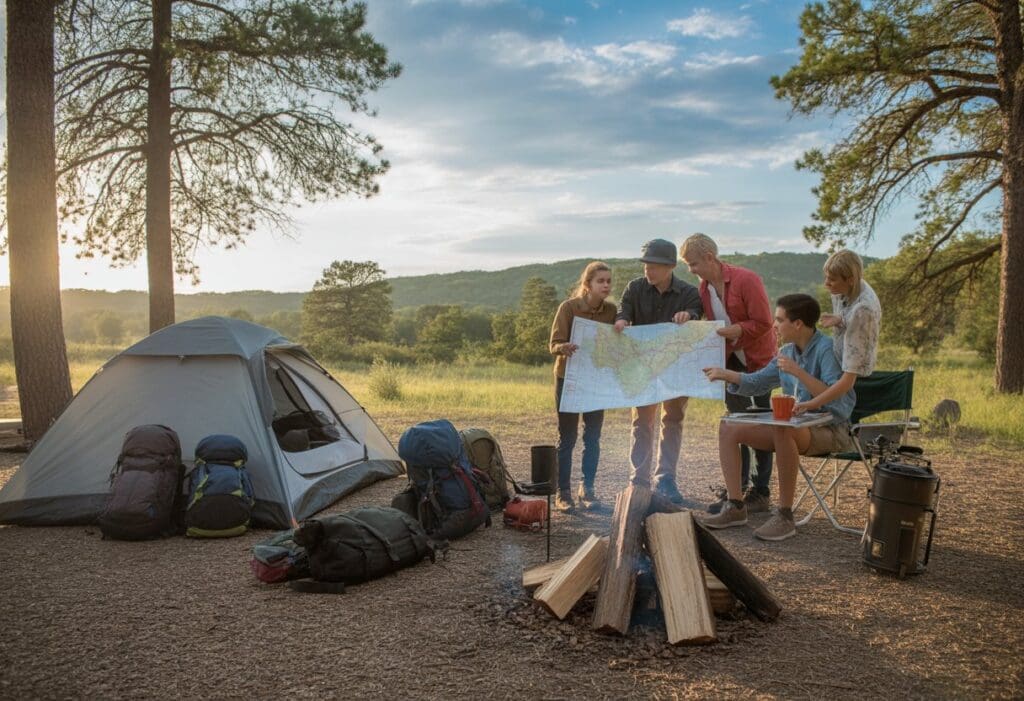
I book early, pick my timing, and pack smart. It’s the only way to keep your trip from going off the rails in a Texas park.
Making Reservations and Permits
I always try to reserve early, especially at popular parks. The Texas State Parks website makes it easy to check what’s open and book online.
If I have questions, I call the park directly. Places that require permits for backcountry or group camping, so I check the rules and arrive accordingly.
For quick tent camping, many parks have self-parking. However, honestly, booking ahead is generally less stressful.
I keep my confirmation handy – most parks will ask for it at the gate.
Best Times of Year to Camp
Texas, unpredictable, the place around it. Spring and fall are usually best—mild, lots of wildflowers, not too crowded.
Summer? It gets hot, especially in the southern regions, so I look for shade or swimming. Winis is suitable for camping in most places, but nights can get cold, especially in the Panhandle or hill country.
If I want things quiet, I aim for weekdays or off-peak times. Festivals and school breaks can pack the parks.
Packing and Preparation Essentials
I pack for comfort and whatever Texas weather decides to throw at me. My list always includes a tent, a sleeping bag, clothes for the season, a first aid kit, a flashlight, and plenty of food and water.
Mosquito spray and sunscreen are absolute musts. If I’m planning to hike, I grab sturdy shoes and a map.
Some parks have water, but not all, so I check ahead. I use the Texas State Park Camping Guide to see what gear is allowed and if I can buy firewood there (some parks ban outside wood).
Staying organized makes camp setup way easier, and I enjoy being outside.
Types of Camping in Texas
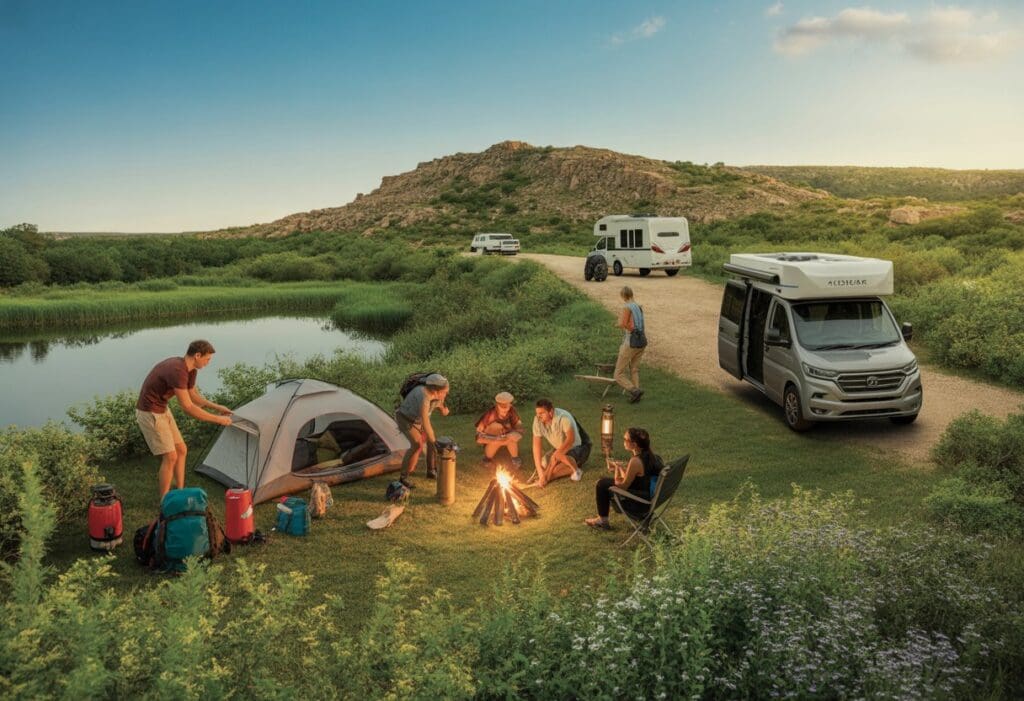
Campiexas covers all the bases. Whether you want to rough it in a tent, roll in with an RV, or disappear into the wilderness, you’ll find your style here.
Tent Camping
Tent camping is the classic Texas experience. Most private offers feature sites equipped with picnic tables, fire rings, and nearby restrooms.
Enchanted Rock, Garner State Park, and Palo Duro Canyon are all solid choices for a tent trip. If I want more solitude, I look for prime sites – I know that amenities might be far away.
I always bring a tough tent, bug spray, and more drinking water than I think I’ll need. Texas weather is notoriously unpredictable, especially during the summer.
Most campgrounds let you reserve online. Here’s what’s typical at tent sites:
| Amenity | Available? |
|---|---|
| Drinking Water | Usually |
| Picnic Table | Often |
| Fire Ring/Grill | Common |
| Restroom/Showers | Varies by Location |
RV and Trailer Camping
RV and trailer parking is extensive here, especially for those who prefer longer stays or require additional comforts. I look for parks with electric, water, and sewer hookups—Inks Lake and Padre Island are good bets.
Private campgrounds often offer amenities such as Wi-Fi, pools, and laundry facilities, which can be handy. Parking pads range from gravel to paved, so I always check site size before booking.
Being self-contained lets me camp year-round, even when the weather’s wild. Some RV parks have pull-through spots and dump stations, which makes life easier.
A typical RV site might have:
- 30/50-amp electricity
- Water and sewer hookups
- Shade or awnings
- Picnic tables
Rules about generators, quiet hours, and pets vary; check always when I arrive.
Backcountry and Primitive Sites
If you’re after absolute solitude, backcountry camping in Texas is a whole different world. You’ll find these sites tucked away in parks, such as Big Bend, or hidden in remote wildlife areas.
I have to haul in all my gear—no toilets, no water spigots, not even a trash can. Just you, your backpack, and whatever you can carry. Permits are part of the ‘Make a Conscious Effort,’ and I try hard to follow the ‘Leave No Trace’ principle. The land out here deserves it.
Getting around takes some skill. Cell service? Not likely. I rely on my map and a decent sense of direction. The reward: nights under skies packed with stars, a quiet you don’t get anywhere else.
Here’s what I usually pack for primitive camping:
- Tent or bivy shelter
- All the water I’ll need
- Food stashed in animal-proof containers
- Emergency kit and navigation tools
Texas weather can swing from calm to wild in a hurry; entire areas shut down during wildfire season, so I always check conditions before heading out.
Campground Activities and Experiences
Camping in Texas feels like a choose-your-own-adventure. Every region—whether it’s the desert or the breezy coast—brings its flavor, scenery, and wild critters.
Hiking and NaHiking ’sils
Hiking’s probably my favorite way to get to know Texas. The Hill Country is full of scenic trails -Enchanted Rock and Pedernales Falls State Park are two that come to mind.
Big Bend Ranch Park ups the challenge with challenging desert hikes and jaw-dropping canyon views. Over 300,000 acres of wilderness, where you can lose yourself (in a good way). If that’s the case, plenty of offer parks have shorter, easy-to-follow trails that work for those or folks starting.
Visitor centers usually hand out maps; alternatively, you can also find them online. Some parks even run guided hikes during busy seasons. I always lace up sturdy shoes and carry more water. I think I’ll need it. Don’t heat doesn’t play around.
Water Recreation and Fishing
Water makes camping, in my honest opinion. At Padre Island National Seashore, I can swim, kayak, or cast a line along miles of its beach. It’s a peaceful journey if you’re lucky; you might spot sea turtles.
Hill Country rivers and lakes—like Inks Lake or the Guadalupe—are perfect for canoeing, tubing, or fishing. Some parks rent out boats or have set spots for fishing.
One thing to appreciate is that, in most states, fishing from shore does not require a license. Bass, catfish, they’re all out there. Safety signs are posted near swimming and boating areas, which help keep everyone out of trouble.
Stargazing and Wildlife you reng
If you’ve never looked up at the night sky, you’re missing out. Big Bend Ranch State Park is famous for its clear, dark skies. On the right night, you can see the Milky Way stretch forever. A few host parks offer stargazing events or set up viewing spots, which can be found on the map.
Wildlife was also significant in drawing. In East Texas pine woods or Hill Country fields, I often spot deer, armadillos, and songbirds – sometimes even a fox if I’m quiet. Out at Padre Island, spring and summer bring migratory birds and maybe even a nesting sea turtle.
I always bring binoculars and try not to go too close to the animals. If I stay quietly and move slowly, I usually see more.
Essential Safety and Conservation Tips
Staying safe in Texas parks means being wise, making smart choices, and respecting the law. I keep an eye on the weathervane with care, and my attention is drawn to it, not to bother the wildlife.
Weather Awareness and Preparedness
Texas weather keeps you on your toes. I check the forecast every day before and during my trips. Tornadoes, flash floods, crazy winds, or brutal hurricanes all occur, especially in spring and summer.
Whenever I include checklists, I always include sunscreen, extra water, and a hat. If flying, I skip low spots that might flood and look for higher ground to pitch my tent.
A battery-powered weather radio comes with me, and I keep my phone charged for alerts. Those hot days, I hide out in the shade and drink water constantly. If thunder rolls in, I head for my car or a park building and wait it out.
| Essential Weather Gear | Purpose |
|---|---|
| Rain jacket | Stay dry |
| Wide-brim hat | Sun protection |
| Sunscreen | Prevent sunburn |
| Weather radio | Receive alerts |
| Extra water | Prevent dehydration |
Responsible Campfire Practices
Campfires set the mood, but they can get out of hand fast—especially in dry stretches of Texas. I always double-check the local burn notice before considering striking a match.
I stick to the fire ring that the park provides. Before lighting up, I clear away any dry stuff within ten feet—leaves, twigs, grass, all of it. I keep water and a shovel close, just in case.
For fuel, I use only small, dry wood I find on the ground or buy locally. Cutting live trees or hauling wood from home? Not a good idea—it messes with the ecosystem.
When I’m done, I douse the ashes, stir them up, and repeat the process until everything’s cold. I never leave a fire; I’m right there.
Fire Safety Checklist:
- Ask about burn bans or park rules
- Only use the approved areas
- Keep fire small and manageable
- Fully extinguish before leaving camp
Respecting Wildlife and Nature
Protecting Texas wildlife is a big part of every trip. I never feed wild animals, as that makes them too comfortable around people, and honestly, it can disrupt their natural habitats.
When I’m in Texas parks, I stash all my food and anything that smells in sealed containers or lock it in my car. Staying on marked trails feels like the least I can do to avoid trampling plants or disturbing animal homes.
If I spot deer, raccoons, armadillos, or the occasion, I watch quietly from a distance. Trying to touch or catch them? Not a chance.
Picking flowers or plants isn’t allowed in most Texas state parks, which makes sense. I always carry out my trash – including food scraps—because nobody wants to hike someone else’s mess or lure critters to a campsite.
Ways I Respect Nature:
- Pack out everything I bring in
- Keep noise low so wildlife isn’t spooked
- Snap photos instead of picking wildflowers
- Never collect rocks or driftwood without asking first

Christian Linden is a seasoned writer and contributor at Texas View, local Texas resident, travel enthusiast.and author of the Home Energy Playbook. He specializes in topics that resonate with the Texan community. With over a decade of experience in journalism, Christian brings a wealth of knowledge in local politics, culture, and lifestyle. When he's not writing, Christian enjoys spending weekends traveling across Texas with his family, exploring everything from bustling cities to serene landscapes.