Texas electricity deregulation means consumers choose their electricity provider instead of being assigned one by location. Since 2002, most Texas residents can shop for electricity plans from competing retail electric providers (REPs).
Around 85% of Texans have the freedom to choose their electricity provider, unlike many states where residents are locked into one utility. This energy deregulation has turned the Lone Star State into a competitive marketplace, where companies vie for your business.
While this means more options and better pricing, it can also leave folks scratching their heads trying to figure out which plan fits their needs. Understanding how this system works is key to avoiding high bills and finding the right electricity plan. Here’s how it works, and what it means for Texans today.
- Key Concepts of Texas Electricity Deregulation
- How the Deregulated Electricity Market Operates
- Types of Electricity Plans You Can Choose
- How to Shop for and Buy Electricity in Texas
- Oversight, Consumer Protections, and Market Innovations
- The History and Ongoing Impact of Deregulation in Texas
- Frequently Asked Questions
Key Concepts of Texas Electricity Deregulation
Texas electricity deregulation stands out for a few reasons. The market structure, the way the Public Utility Commission of Texas (PUCT) oversees things, and the fact that not every part of the state is deregulated all shape what choices folks actually get, and what they end up paying.
What Is Electricity Deregulation?
With electricity deregulation, Texans aren’t stuck with just one utility company for their power supply. In places like Dallas or Houston, residents can pick from a variety of Retail Electric Providers (REPs) competing for their business, each offering their rates, plans, and customer service quirks. Transmission and distribution stay regulated, but the sale of electricity itself is wide open for competition.
This setup helps keep monopolies at bay and encourages lower prices and better service. The PUCT keeps a close eye on the market to make sure companies play fair and customers get a fair shake. If a provider’s rates or service don’t cut it, switching to another REP is usually pretty painless.
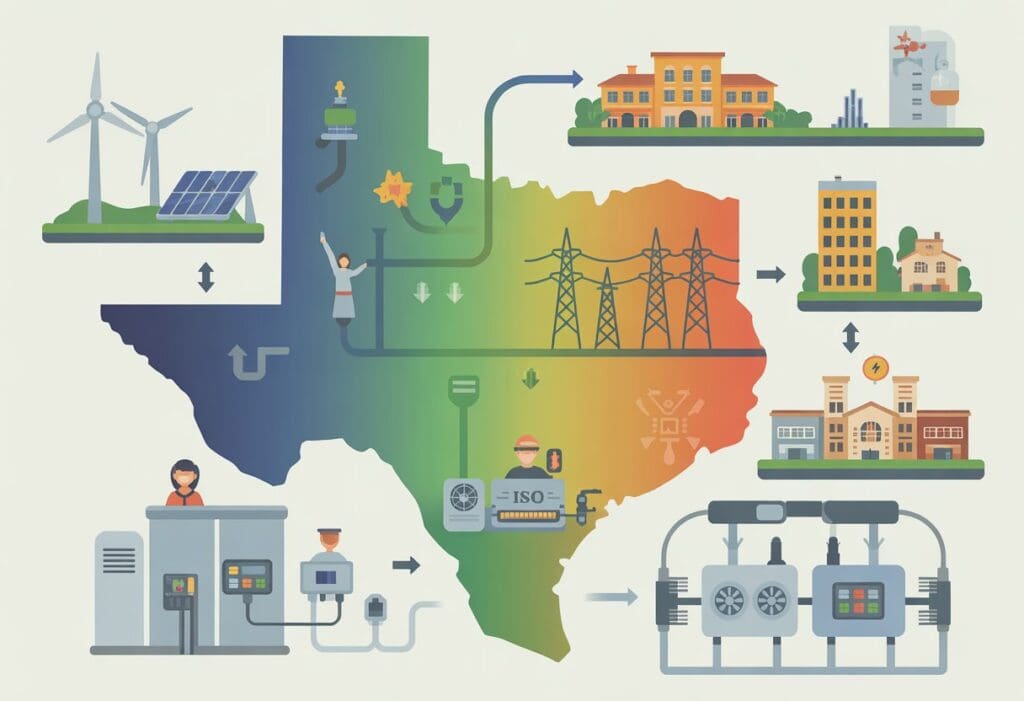
How the Texas Market Is Structured
The Electric Reliability Council of Texas (ERCOT) keeps the Texas electricity grid humming, managing about 85% of the state’s electric load. The PUCT oversees ERCOT and works to keep competition fair. The system breaks down into three main jobs:
- Power Generators: These folks produce electricity and sell it on the wholesale market.
- Transmission and Distribution Utilities (TDUs): They handle the poles, wires, and keep the lights on, literally.
- Retail Electric Providers (REPs): These are the companies selling electricity plans to homes and businesses.
Only REPs actually compete for customers. TDUs and generators still answer to state regulators. ERCOT’s job is to keep the Texas grid stable, matching supply and demand every minute of the day. The mix of open retail competition and regulated delivery keeps things both innovative and reliable.
Key Players in Texas Electricity Deregulation
| Key Player | Role | Description |
|---|---|---|
| Electric Utilities | Providers of electricity | Companies that generate and deliver electricity. |
| Retail Electric Providers (REPs) | Sell electricity to consumers | Companies that offer various electricity plans to customers. |
| Public Utility Commission of Texas (PUCT) | Regulates the market | Oversees the electricity market and ensures fair practices. |
| Electric Reliability Council of Texas (ERCOT) | Manages grid reliability | Coordinates electricity flow and ensures grid stability. |
Deregulated vs. Regulated Areas in Texas
Not all of Texas runs on deregulation. About 85% of folks think Dallas, Houston, Corpus Christi, can pick their REP. The rest, mostly smaller towns or rural spots, stick with municipal utilities or electric co-ops that still follow the old regulated model.
In regulated areas, customers buy power from the local authority’s chosen supplier, with no option to shop around for better deals. In deregulated areas, switching providers is fair game, and there’s a broader mix of plans, including options from West Texas wind farms or prepaid contracts. This matters if you’re moving within Texas or comparing bills with friends across the state.

How the Deregulated Electricity Market Operates
Texas electricity deregulation splits up energy production, delivery, and retail sales. Texans pick their electricity plan and provider, while different entities make sure the lights stay on and everyone knows their role.
Benefits of Deregulation
| Benefit | Description |
|---|---|
| Customer Choice | Consumers can select from multiple REPs and plans. |
| Competitive Pricing | Increased competition can lead to lower rates. |
| Innovative Plans | Availability of diverse plans tailored to different needs. |
| Enhanced Customer Service | Retailers may offer better service to attract customers. |
The Role of Retail Electricity Providers (REPs)
Retail Electricity Providers (REPs) go head-to-head for customers in Texas. Since deregulation, they’ve handled selling power straight to homes and businesses. Texans can shop dozens of plans, fixed rate, variable, 100% renewable, you name it, and pick what fits their needs best.
REPs take care of billing, customer service, and offer features like rewards programs or green energy plans. They buy electricity on the wholesale market and manage accounts, even if someone moves within a deregulated area.
With so many REPs in the mix, there’s more competition, which usually means better rates and more creative plan options. Still, it pays to research, contract fine print, company reputation, and service quality, which can vary a lot.
Utility Companies and Their Functions
Texans don’t get to pick their local utility company. Utilities handle the infrastructure, poles, wires, meters, all the stuff that actually brings electricity to a home or business. When outages hit or repairs are needed, the utility steps in, not the REP.
Utilities don’t sell electricity or handle billing in deregulated zones. No matter which REP someone chooses, the utility for that address stays the same. For outages or emergencies, the utility’s number to call.
Utility companies are regulated, and delivery fees show up as a separate line on the bill. Everyone in the same area pays the same delivery fee, which helps keep the grid maintained and reliable for all.
How ERCOT Manages Market Reliability
The Electric Reliability Council of Texas (ERCOT) sits at the heart of the state’s deregulated market. ERCOT manages electricity flow for almost 90% of Texans. No matter which provider someone picks, ERCOT coordinates the power coming into their home.
ERCOT acts as a neutral grid operator, balancing supply and demand in real time. They direct power plant operations, run the wholesale market, and keep utilities and REPs in sync for steady delivery.
When extreme weather or sudden spikes in usage hit, ERCOT issues alerts and works with utilities to keep the system stable. Because Texas runs its own grid, separate from the rest of the country, ERCOT’s independence gives the state more say, but also more responsibility when things go sideways.

Types of Electricity Plans You Can Choose
In Texas, folks can pick an electricity plan that matches their budget and preferences. The plan type affects what you pay, how prices change, and whether you end up supporting wind or solar power from the Panhandle or West Texas.
Common Electricity Plans in Texas
| Plan Type | Description | Ideal For |
|---|---|---|
| Fixed-Rate Plans | Rates remain constant for a set period. | Consumers who prefer predictability. |
| Variable-Rate Plans | Rates can fluctuate based on market conditions. | Those who want flexibility. |
| Prepaid Plans | Pay for electricity in advance without a contract. | Budget-conscious consumers. |
| Green Energy Plans | Source electricity from renewable resources. | Environmentally conscious consumers. |
Fixed-Rate Plans
Fixed-rate plans lock in a set price for electricity over a contract, usually 12, 24, or even 36 months. No matter how the Texas market swings, the kWh rate stays the same, which helps folks avoid nasty bill surprises during peak demand.
These contracts tend to work well for people who want predictable bills and don’t want to worry about sudden price hikes. But if market prices drop, there’s a chance to miss out on savings. Early cancellation usually means a fee, so it’s worth reading the contract carefully.
Variable-Rate Plans
Variable-rate plans have prices that can change, sometimes every month. Bills go up or down with the market, so there’s a shot at savings when rates dip, but a real risk of higher costs during those blazing Texas summers.
No long-term contract here, switching providers is easy and penalty-free. Folks who like flexibility and don’t mind keeping an eye on the market might find these plans appealing. But prices can jump with little warning, and not paying attention can lead to a shock when the bill arrives.
Renewable Energy Options
Plenty of Texas plans let customers choose electricity from renewable sources like wind and solar. Some plans are fully renewable, others just partially. The Electricity Facts Label spells out the percentage, so it’s worth checking before signing up.
Rates for renewable plans can run a bit higher, but competition sometimes keeps them close to standard rates. Choosing a renewable plan means putting money behind clean energy development in the state, something that’s become a bigger deal with all the wind farms popping up out west.

How to Shop for and Buy Electricity in Texas
Buying electricity in Texas puts more control over energy costs in the hands of the customer. Comparing rates, switching providers when it makes sense, and understanding the bill all help Texans avoid paying too much.
Comparing Electricity Rates
Start by looking at monthly usage from past bills; most plan rates hinge on those usage levels. Tools like Compare Power or other comparison sites show current rates, including delivery and supply charges.
Don’t just focus on the advertised price per kilowatt-hour (kWh). Some plans lure folks in with low introductory rates that jump later, or they have tiered pricing that only applies within specific usage ranges. Contract length and early termination fees can make a big difference, too.
Comparing options, fixed-rate, variable-rate, or renewable plans, takes a little time, but it’s worth it. Shopping in spring or fall, when demand drops, sometimes means snagging lower prices. Watching out for hidden fees or tricky terms can keep those bills from creeping up unexpectedly.
Comparison Checklist
- Look over past usage
- Check the price per kWh for your typical usage
- Compare contract lengths and fine print
- Watch for extra fees and check out renewable options
Switching Energy Providers
Switching energy providers in Texas? It’s honestly not all that complicated. Folks can enroll online or by phone with a new provider, and there’s no need to call up the old one; the latest company takes care of the switch behind the scenes.
Electricity keeps flowing without a hiccup, since the local wires company (your utility) still handles delivery, no matter which retail electricity provider you pick. Before making a move, it’s smart to check if the contract’s about to expire or weigh the early termination fee against any savings from lower rates.
Breaking a contract sometimes makes sense, primarily if the math works out. Some providers even dangle bill credits or perks to lure new customers. Digging into how to sign up or switch helps Texans avoid paying too much and keeps options open.
Steps to Switch
- Check your current contract status and expiration
- Compare available plans and rates for your area
- Choose a new provider and enroll
- Confirm the switch and start saving
Understanding Your Electricity Bill
Texas electricity bills usually show charges from both the provider and the utility. The main parts? Energy charges (the rate you agreed to with your chosen provider) and delivery charges (fees set by the local utility to get power to your home).
Extra items like minimum usage fees, base charges, or seasonal tweaks sometimes sneak in. Looking over the breakdown can reveal errors or hidden costs that slip by if you’re not paying attention.
When usage suddenly jumps, it’s worth checking if tiered plans or overage rates kicked in. Detailed bills help Texans track savings after switching and make it easier to sort out what’s for supply versus delivery, handy when comparing offers or disputing something odd.

Oversight, Consumer Protections, and Market Innovations
Keeping the Texas electricity market competitive and secure takes real oversight. The state’s approach to deregulation has brought clear benefits, from regulatory protections to the adoption of new tech, though it’s not without its quirks.
Regulatory Oversight by PUCT and ERCOT
The Public Utility Commission of Texas (PUCT) sets the rules for the state’s competitive electricity marketplace, working to prevent fraud and keep pricing transparent for Texans. PUCT’s guidelines shape a fair playing field for both established and upstart retail providers.
The Electric Reliability Council of Texas (ERCOT) keeps tabs on the grid and steps in when reliability is at risk. During emergencies or grid overloads, ERCOT can cut or reroute electricity to big industrial users, which helps keep the lights on for everyone else. Recent laws have pushed ERCOT to share more about major projects and, if needed, temporarily limit power to large consumers, aiming for steadier service at the household level.
These checks and balances help secure the grid and keep rate spikes in check. Regulators now walk a line between letting the market run and stepping in when large projects start shaking up local prices or capacity.
Smart Home Integration and New Technologies
Deregulation has kicked off a wave of innovation in Texas, bringing new energy tech and smart home options within reach. Plenty of providers now offer plans that reward folks for using smart thermostats, energy-efficient appliances, or connecting home solar panels.
It’s possible to track real-time usage, automate when appliances run, and even sell extra rooftop solar juice back to the grid. Smart meters, demand-response programs, and app-based controls let Texans manage their electricity costs and habits in ways that just weren’t possible a decade ago.
For those seeking to reduce their bills, some providers have introduced special rates and perks for purchasing smart plugs or home battery systems. The competitive market keeps these ideas coming, making innovation something regular folks can actually use.
The History and Ongoing Impact of Deregulation in Texas
Texas electricity deregulation started with a series of legal changes, sped up the adoption of renewables, and set the stage for a market that’s competitive, though not always simple. Here’s a look at where it began, how the energy mix shifted, and what’s likely down the road.
Legal Foundations and the Energy Policy Act of 1992
Federal law, the Energy Policy Act of 1992, gave Texas the green light to open up its electricity market and invite competition.
By 2002, Texas had gone all-in on deregulation. Before that, local utilities ran the show, setting rates and controlling service for everyone in their territory. ERCOT stepped in as the primary grid operator, splitting up generation, distribution, and retail sales.
Suddenly, consumers had real choices, multiple providers, a range of plans, and the chance to shop for power based on price, type, or contract terms.
Growth of Renewable Energy
Deregulation helped Texas jump ahead as a leader in wind energy and other renewables. Investment poured into wind and solar projects all over the state, and clean power generation climbed fast.
The competitive market was a big part of this. Retail providers hustled to meet demand for renewable electricity, and the state expanded transmission lines out to the wind farms west of Abilene and Amarillo. These days, Texas often tops the charts for wind energy production in the U.S., thanks to massive projects and a market that rewards flexibility.
Market Trends and Future Outlook
Since deregulation, the Texas market keeps shifting. Power plans come in more flavors than ever, and technology has nudged retailers to offer things like West Texas wind, smart meters, and time-of-use rates.
Still, it’s not all smooth sailing. Prices can swing wildly during heat waves or winter storms. Doing the homework, researching providers and plans, matters more than ever. Looking forward, expect more focus on grid resilience, battery storage, and weaving in even more renewables.

⚡ Check Texas Energy Rates
Enter your ZIP code to see lowest electricity rates in Texas


Frequently Asked Questions

Christian Linden is a seasoned writer and contributor at Texas View, local Texas resident, travel enthusiast.and author of the Home Energy Playbook. He specializes in topics that resonate with the Texan community. With over a decade of experience in journalism, Christian brings a wealth of knowledge in local politics, culture, and lifestyle. When he's not writing, Christian enjoys spending weekends traveling across Texas with his family, exploring everything from bustling cities to serene landscapes.