In Texas, the Transmission and Distribution Utility (TDU) delivers electricity based on your zip code. Companies like Oncor and CenterPoint Energy handle power delivery, while retail providers manage billing and plan options.
Did you know that in Texas, the company that brings electricity to your home is not the one you choose for your energy plan? That’s right! The Transmission and Distribution Utilities (TDUs), like Oncor and CenterPoint Energy, are responsible for getting the power to your doorstep, while your retail provider handles your billing and plan options.
Understanding which TDU serves your area is crucial, especially during outages or emergencies. Your zip code determines this, so knowing who to call can save you a lot of frustration. Let’s break down how this works and what it means for Texans today.
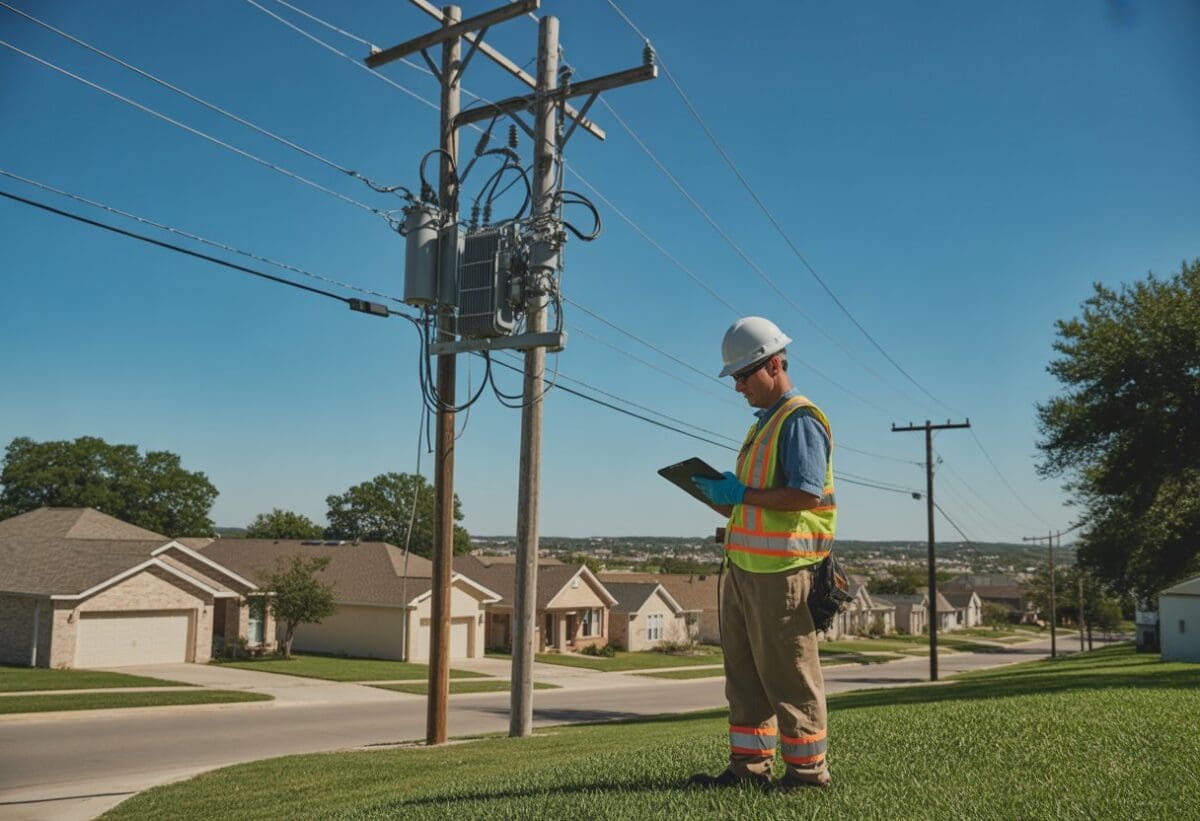
How to Identify Your Power Delivery Company
Sorting out outages and billing questions in Texas starts with knowing which company delivers electricity to your address. You can figure this out using the official lookup tools, zip code searches, and a basic understanding of how service areas work.

⚡ Check Texas Energy Rates

Use of ESID Lookup Tools
Every Texas service address gets a unique Electric Service Identifier (ESID). ESID lookup tools let you plug in your address or ESID to see which TDU delivers your power. You’ll find these tools on most major provider sites and at the Public Utility Commission of Texas.
Once you enter your info, the tool shows whether Oncor, CenterPoint, AEP North, AEP Central, or Texas-New Mexico Power is on duty for your property. That means you’ll get the correct contact details for things like power delivery and outage reporting. Don’t know your ESID? Some tools let you search by meter number or just your service address.
It’s always smart to stick with secure, official sites when entering your details.
Confirming Service by Zip Code
TDUs in Texas are assigned by address, not by customer. To confirm which one covers your spot, look up your zip code using resources from the Public Utility Commission of Texas, ERCOT, or major utility sites.
Most utility websites have zip code search features or interactive maps. Enter your zip code and you’ll see which TDU handles power delivery for your location. If your zip code straddles more than one service area, you might need to enter your full address for a clear answer.
Zip Code and TDU
| Zip Code Range | Transmission and Distribution Utility (TDU) |
|---|---|
| 75001 – 79999 | Oncor |
| 77001 – 77599 | CenterPoint Energy |
| 88510 – 88589 | Texas-New Mexico Power |
| 78101 – 78399 | AEP Texas North / AEP Texas Central |
Major Utilities in Texas
| Utility Company | Service Area |
|---|---|
| Oncor | North and West Texas (Dallas, Fort Worth) |
| CenterPoint Energy | Greater Houston area and Gulf Coast |
| Texas-New Mexico Power | Smaller cities and rural areas |
| AEP Texas North | Abilene, San Angelo, and surrounding areas |
| AEP Texas Central | Corpus Christi, McAllen, and Laredo |
Understanding Service Area Maps
Service area maps break down how Texas is carved up among the five main TDUs. These maps, usually from the Public Utility Commission of Texas or ERCOT, show boundaries for Oncor, CenterPoint, AEP North, AEP Central, and Texas-New Mexico Power. By checking your location against these boundaries, you’ll know which utility maintains your lines and handles outages.
If you’re close to a service area border, double-check your address using official lookup tools. Service area maps are a handy way to figure things out when moving or double-checking utility responsibilities.
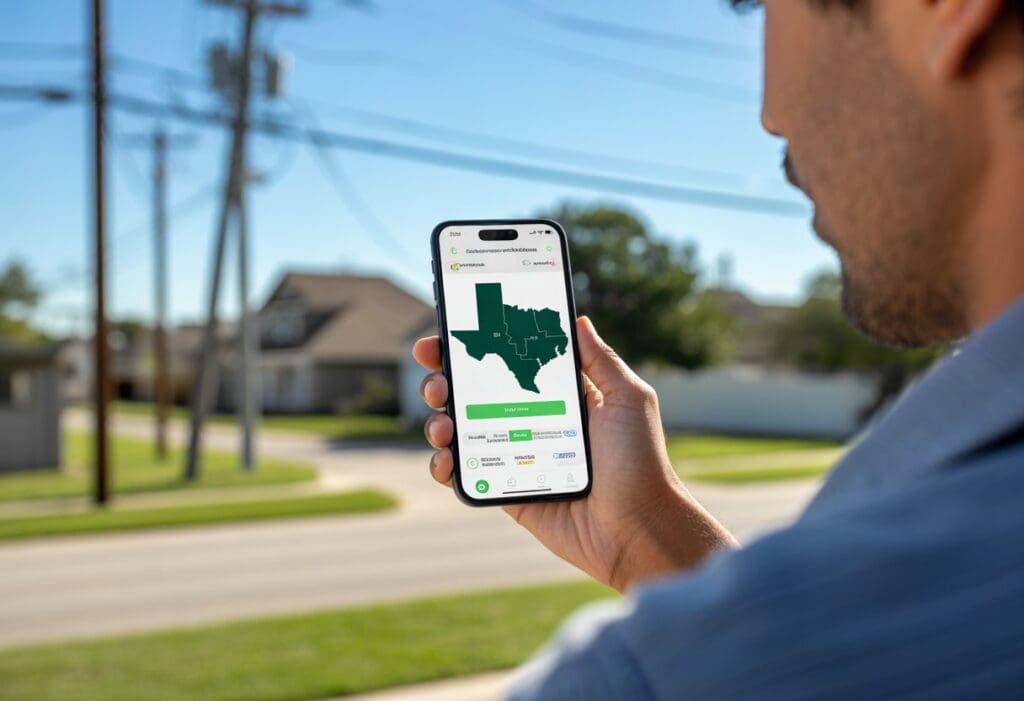
Major Utility Companies Delivering Power in Texas
In Texas, your address, not your choice of electricity plan, decides which company delivers your power. These utilities handle outages, repairs, and the grid itself. Your plan and provider? That affects your bill and contract, not the wires running to your house.
CenterPoint Energy Service Areas
CenterPoint Energy runs the grid across the Greater Houston region and much of the Gulf Coast. Folks in Houston, Sugar Land, Katy, Baytown, or Galveston get their power delivered by CenterPoint.
They maintain and upgrade power lines, handle outages, and service meters. During storms or emergencies, CenterPoint’s crews get called out for restoration and status updates. Outages or meter issues? You’ll want to reach CenterPoint directly, either online or by phone.
They handle just the delivery side; choosing your electricity plan is still up to you, and CenterPoint doesn’t set your rates.
Oncor Electric Delivery Coverage
Oncor Electric Delivery covers the most extensive territory in Texas, stretching across North and West Texas, including Dallas, Fort Worth, Waco, Tyler, Wichita Falls, and Midland.
With over 143,000 miles of lines, Oncor keeps everything running, maintains transformers and meters, and works to keep electricity safe and reliable. Their crews respond to outages all year and invest in the grid for new developments and renewable energy projects.
If you see a downed line or lose power in Oncor’s territory, contact Oncor directly. Your zip code will tell you if you’re in their area.
AEP Texas North and Central Regions
AEP Texas divides its service into AEP Texas Central and AEP Texas North. Central covers Corpus Christi, McAllen, Laredo, and Victoria. North handles Abilene, San Angelo, Big Spring, and Vernon.
AEP Texas takes care of power delivery, line and pole repairs, meter reading, and outage response across both urban and rural communities. If you’re in their region, they maintain your infrastructure. For any outages or emergencies, AEP is your go-to, not your retail provider.
Texas-New Mexico Power Locations
Texas-New Mexico Power (TNMP) delivers electricity to a spread of smaller cities and fast-growing rural and suburban areas. Lewisville, Alvin, and Pecos are a few of the places TNMP covers, along with other outlying Texas towns.
TNMP focuses on local service, including the installation and maintenance of lines, meter reading, outage repair, and the extension of electricity to new or underserved communities. Even though their footprint is smaller, TNMP’s role is vital for reliable power in their areas.
Customers can reach TNMP through their service lines or online outage reporting. You still pick your retail electricity plan separately, but TNMP takes care of everything related to delivery and infrastructure where they operate.

Understanding Retail Electricity Providers in Your Area
Most Texans live in a deregulated electricity market, which means you can pick which retail electricity provider (REP) supplies your home. This lets you shop for plans and rates that fit your lifestyle.
Choosing a Provider in Deregulated Markets
Texans don’t have to stick with just one electric company. The market gives you the freedom to choose a retail electricity provider (REP) based on your address and zip code. Companies like Gexa Energy, Cirro Energy, Direct Energy, Rhythm Energy, TXU Energy, and Frontier Utilities serve numerous communities.
Your local utility still handles the physical delivery, meters, and outage response. REPs handle billing, customer service, and plan options. If your power goes out, you call the utility, not the REP.
To narrow things down, check which providers serve your zip code using online tools. Then compare what each one offers, from fixed or variable rates to renewable energy and contract details.
Comparing Plan Types and Rates
Retail electricity providers offer a mix of plans. Compare by price per kilowatt-hour, contract length, fees, and the amount of renewable energy included. Gexa Energy and Rhythm Energy tend to focus on green or 100% renewable plans. TXU Energy and Direct Energy sometimes have flexible agreements or rewards.
| Provider | Plan Types | Renewable Options | Contract Lengths |
|---|---|---|---|
| Gexa Energy | Fixed, Variable | Yes | 12, 24, 36 months |
| Rhythm Energy | Fixed, Variable | Yes (100%) | 12, 24 months |
| TXU Energy | Fixed, Prepaid | Some | 12, 24, 36 months |
| Frontier Utilities | Fixed, Variable | Yes | 12, 24 months |
| Direct Energy | Fixed, Variable | Some | 12, 24, 36 months |
| Cirro Energy | Fixed, Variable | Some | 12, 24, 36 months |
These differences can make a real impact when you’re trying to find a plan that fits your household and budget.
Available Retailers by Zip Code
The retail electricity providers you can pick from depend on your location. Each zip code across Texas could have a different lineup of REPs, thanks to service area boundaries and utility coverage.
To see your options, enter your zip code on comparison sites or the official sites of providers. Companies like Gexa Energy, Rhythm Energy, Cirro Energy, TXU Energy, and others cover a lot of ground, but not every plan is available everywhere.
Some providers might run special deals or exclusive rates in certain areas. It’s a good idea to double-check the current lineup and plan details for your address before committing.
Key Charges and Regulations Affecting Power Delivery
When you look at your Texas electric bill, most of the cost breaks down into two parts: what you pay the retail provider for the electricity you use, and what you pay the utility that delivers it to your home. Knowing how these charges work makes it easier to track where your money’s going and who’s responsible for each part of your service.
TDU Delivery Charges Explained
Transmission and Distribution Utility (TDU) delivery charges cover the nuts and bolts of getting electricity to Texas homes, think poles, wires, meters, and the work crews out there in the summer heat. The TDU for each address is set in stone based on location, and every bill shows these fees, no matter which retail electricity provider shows up on the statement.
TDU delivery charges break down into a flat monthly fee and another piece that depends on how many kilowatt-hours are used. Taking Oncor as an example, in March 2025, the fixed charge is $4.23 each month, and the usage rate is 5.0029 cents per kWh. CenterPoint Energy, AEP Texas, and Texas-New Mexico Power follow the same general pattern, but with their numbers varying by region.
Retail electric providers pass these TDU fees straight through, no markup, no profit on this part. While there’s not much wiggle room to dodge these delivery charges, Texans can still take charge of their overall bill by making their homes more efficient, picking plans with lower energy rates, and checking the itemized details on the monthly statement. Sometimes, understanding where the money goes helps more than folks expect. Energy efficiency can significantly reduce those totals.
Role of the Public Utility Commission of Texas
The Public Utility Commission of Texas (PUCT) decides what TDUs can charge and signs off on every rate. Before implementing any increase or change, the agency thoroughly reviews cost reports and assesses infrastructure needs. Texans never face random fees; every delivery charge on the bill has survived a regulatory gauntlet.
PUCT usually looks at these rates twice a year, around March and September. Sometimes, if a utility has a good reason, like fixing lines after a Gulf Coast hurricane, they can ask for a change outside the regular schedule. The PUCT also makes sure retail electric providers don’t tack on extra charges to delivery fees and demands that bills spell things out clearly.
Anyone curious about the details can pull up the Electricity Facts Label (EFL) from their provider to see exactly what’s getting charged. Understanding how the PUCT monitors utility charges can make navigating Texas energy a bit easier when it’s time to shop for a new plan.
⚡ Check Texas Energy Rates
Enter your ZIP code to see lowest electricity rates in Texas

Frequently Asked Questions

Christian Linden is a seasoned writer and contributor at Texas View, local Texas resident, travel enthusiast.and author of the Home Energy Playbook. He specializes in topics that resonate with the Texan community. With over a decade of experience in journalism, Christian brings a wealth of knowledge in local politics, culture, and lifestyle. When he's not writing, Christian enjoys spending weekends traveling across Texas with his family, exploring everything from bustling cities to serene landscapes.