CenterPoint, Oncor, and AEP are major electric utility companies in Texas. CenterPoint provides electricity distribution, Oncor operates the most extensive transmission and distribution network, while AEP focuses on both generation and distribution services in various regions.
Did you know that many Texans don’t get to choose their electricity provider? That’s right! Your location determines the utility company delivering power to your home. In Texas, CenterPoint, Oncor, and AEP are the leading players, each responsible for keeping the lights on in their regions.
Given the extensive discussion about electricity rates, outages, and energy choices, it’s no surprise that people are confused about what these companies do. Let’s break down how it all works and why it matters for Texans today.
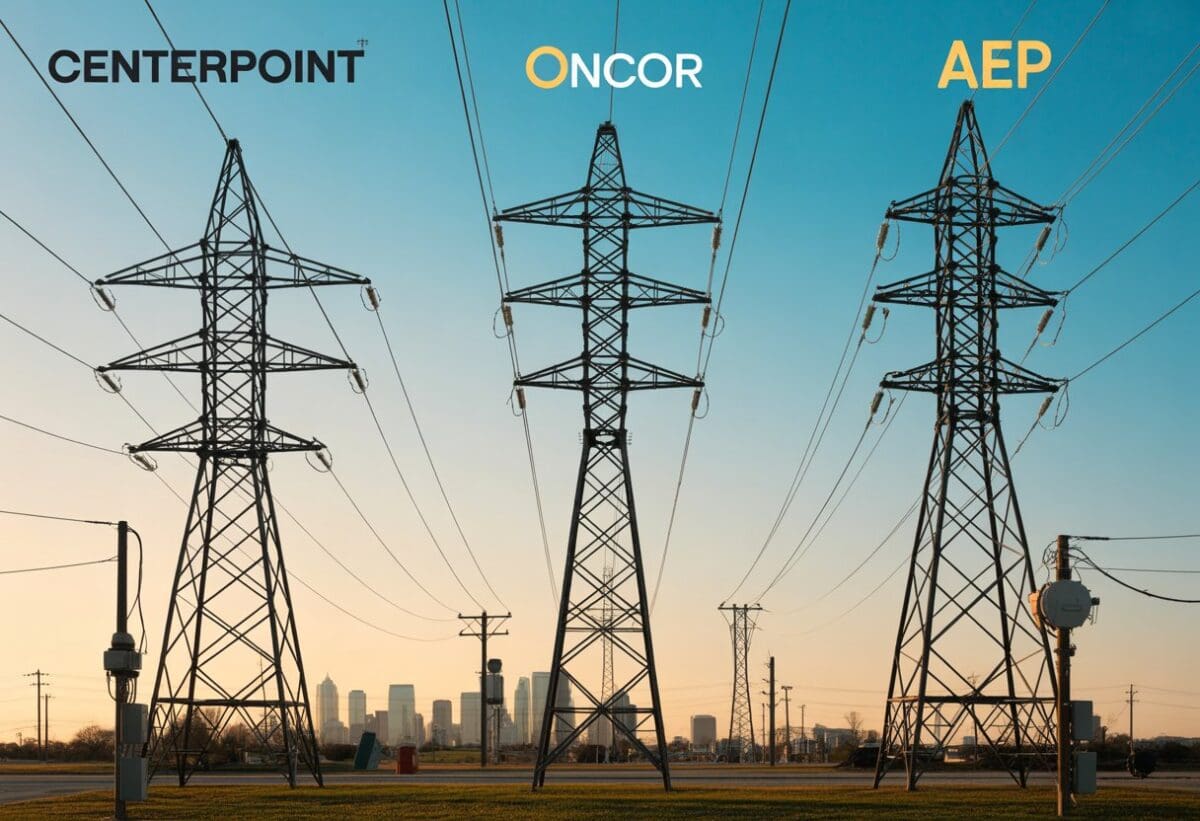
How CenterPoint, Oncor, and AEP Operate in Texas
Texas has set up its electric market so that transmission and distribution utilities (TDUs) have a fairly specific role. Understanding how CenterPoint, Oncor, and AEP operate helps clarify who’s responsible for delivering electricity to your home, maintaining the wires, and responding when issues arise.

⚡ Check Texas Energy Rates

| Feature | CenterPoint | Oncor | AEP |
|---|---|---|---|
| Service Area | Houston and surrounding areas | North Texas | Various regions across Texas |
| Type of Utility | Electric Distribution | Electric Transmission & Distribution | Electric Generation & Distribution |
| Reliability Record | Generally high | Generally high | Varies by region |
| Customer Service | 24/7 support | 24/7 support | 24/7 support |
| Outage Management | Proactive restoration | Proactive restoration | Proactive restoration |
| Rates | Varies by plan | Varies by plan | Varies by plan |
| Website | CenterPoint | Oncor | AEP Texas |
Transmission and Distribution Utility Roles
These big TDUs, CenterPoint, Oncor, and AEP, move electricity from power plants to Texas homes and businesses. People don’t get to choose their TDU; it’s based on their address, so only one company handles the poles and wires in each location.
Utilities like these keep the whole electrical system running. They fix outages, do upgrades, and handle routine repairs. If you report a power outage, the TDU, not your retail electricity provider, sends out a crew to handle it.
TDUs don’t sell electricity plans. Instead, they keep the grid going, making sure it’s safe and reliable. They’re regulated, and their charges show up as separate lines on every Texas electricity bill.
Service Areas and Coverage
CenterPoint handles most of Houston and the nearby counties. Oncor serves Dallas, Fort Worth, and a significant portion of north and central Texas. AEP splits into AEP North and AEP Central, covering places like Abilene, Corpus Christi, and the Rio Grande Valley.
Here’s a quick breakdown:
| Company | Major Cities/Regions Covered |
|---|---|
| CenterPoint | Houston, surrounding counties |
| Oncor | Dallas, Fort Worth, central TX |
| AEP (North/Central) | Abilene, Corpus Christi, Rio Grande Valley |
Each company sticks to its turf, so neighborhoods typically have only one TDU managing the local infrastructure and electricity delivery.
CenterPoint Energy Overview
CenterPoint Energy runs the show for Houston and a big swath of Southeast Texas, delivering power to over four million customers. The company is based in Houston and maintains thousands of miles of power lines and substations.
CenterPoint crews handle maintenance, repairs, and upgrades on the lines that bring electricity to homes and businesses. When storms hit, they roll out fast to restore service. They also manage some natural gas services in certain Texas areas, but that’s a smaller part of what they do.
People living under CenterPoint’s umbrella see their delivery charges as a regulated line on the bill. The company continues to invest in new technology and grid improvements, aiming for a more reliable system, though let’s be honest, big storms still test everyone’s patience.
Oncor Overview
Oncor covers Dallas, Fort Worth, and much of north and central Texas, serving around ten million people. It runs the state’s longest distribution system, over 170,000 miles of lines. That’s a lot of ground to cover, even by Texas standards.
Oncor focuses on keeping its infrastructure reliable and responding quickly when outages happen. Folks in the Oncor area get the benefits of their grid modernization efforts, automation, and steady maintenance, even though you might have a choice of retail electric providers, Oncor’s the only one handling delivery and repairs in its region.
Oncor’s regulated rates and fees show up separately on the monthly bill, making it a little easier to see what you’re paying for delivery, as opposed to the electricity itself.

Key Differences and Important Details
Comparing CenterPoint, Oncor, and AEP Texas involves examining their territories, rate-setting processes, oversight, and how their policies could impact your wallet or service.
AEP Texas North and Central Explained
AEP Texas splits into two divisions: AEP Texas North and AEP Texas Central. AEP Texas North serves areas such as Abilene and the surrounding North Texas region, while AEP Texas Central operates in Corpus Christi and the Rio Grande Valley.
People in West or Central Texas typically have AEP Texas as their utility provider. The two divisions have different territories, which can lead to variations in policies and perceived reliability of the infrastructure, depending on your location.
Both AEP divisions take care of the poles and wires, but don’t sell electricity plans. They focus on maintaining delivery and handling outages. Checking which division covers a specific address usually means looking at a service map or running a zip code search.
AEP Texas stretches its grid across a lot of rural and suburban ground, which can make restoration times and investment priorities different from the more city-focused CenterPoint or Oncor. Knowing which AEP division you’re in can help you set expectations about service, especially after a big storm or during peak demand.
Delivery Charges and Rate Structures
All the big utilities, CenterPoint, Oncor, AEP Texas, and Texas-New Mexico Power (TNMP), add a regulated delivery fee to every bill. That line shows up even if you pick a different energy provider. Delivery charges cover the maintenance of power lines, poles, and meters, as well as the handling of storm damage.
Delivery rates aren’t uniform. CenterPoint and Oncor primarily base their charges on the amount of electricity you use (per kWh), whereas AEP Texas North and Central sometimes add a flat monthly fee to the per-kWh rate.
| Utility | Area Focus | Delivery Rate (Est*) | Monthly Fee (Est*) |
|---|---|---|---|
| AEP Texas North | West/N. Texas | $0.04/kWh | $7/month |
| AEP Texas Central | S. Texas/Coastal | $0.05/kWh | $8/month |
| Oncor | DFW/Central | $0.04/kWh | $4/month |
| CenterPoint | Houston/Gulf | $0.05/kWh | $5/month |
*Estimates only. Utilities update rates twice a year through the Public Utility Commission of Texas.
When comparing electricity plans, those delivery charges stick around no matter which provider you choose, so it’s worth paying attention to them.

Oversight: ERCOT and the Public Utility Commission
The Electric Reliability Council of Texas (ERCOT) keeps the Texas grid running for most of the state. ERCOT manages the flow of electricity, balancing supply and demand in real time. Keeping the power on during high demand or emergencies falls on their shoulders.
The Public Utility Commission of Texas (PUCT) regulates utilities like CenterPoint, Oncor, and AEP Texas. The PUCT sets the rules, signs off on delivery rates, and investigates outages or billing complaints. Texans can file complaints with the PUCT when they run into reliability problems or questionable billing.
Utilities follow ERCOT’s protocols for outages, load shedding, and grid investments. They also report to the PUCT about infrastructure upgrades and storm response efforts. ERCOT and the PUCT play a significant role in ensuring Texas utilities remain accountable to the people they serve.
Impact on Electricity Demand and Customer Experience
For folks living in Texas, electricity demand and utility reliability shape daily life in some pretty tangible ways. In packed cities like Houston, where CenterPoint runs the show, and across the Dallas-Fort Worth sprawl with Oncor, crews usually handle storm damage faster and roll out upgrades more often. That’s just the reality when you’ve got tons of meters close together and a bigger pot for investment.
Meanwhile, out in West Texas or along the coast, where AEP Texas North, AEP Texas Central, or TNMP serve smaller towns and growing suburbs, outages sometimes drag on longer, especially if a blue norther sweeps through or a hurricane knocks things sideways.
Utilities closely monitor numbers like SAIDI (Service Average Interruption Duration Index) and SAIFI (Service Average Interruption Frequency Index) to gauge the frequency and duration of power outages for Texans in these regions.
When demand spikes, think those 105-degree afternoons in August, utilities scramble to balance the load and keep the lights on. That pressure influences everything from how often the grid buckles to how quickly neighborhoods see new lines or substations.
The company delivering power to your home influences decisions about backup generators, weatherization, and expectations during thunderstorms that knock out the lights. There’s no one-size-fits-all experience, and sometimes, you have to hope your utility’s got your back when the next storm rolls in.
⚡ Check Texas Energy Rates
Enter your ZIP code to see lowest electricity rates in Texas


Christian Linden is a seasoned writer and contributor at Texas View, local Texas resident, travel enthusiast.and author of the Home Energy Playbook. He specializes in topics that resonate with the Texan community. With over a decade of experience in journalism, Christian brings a wealth of knowledge in local politics, culture, and lifestyle. When he's not writing, Christian enjoys spending weekends traveling across Texas with his family, exploring everything from bustling cities to serene landscapes.