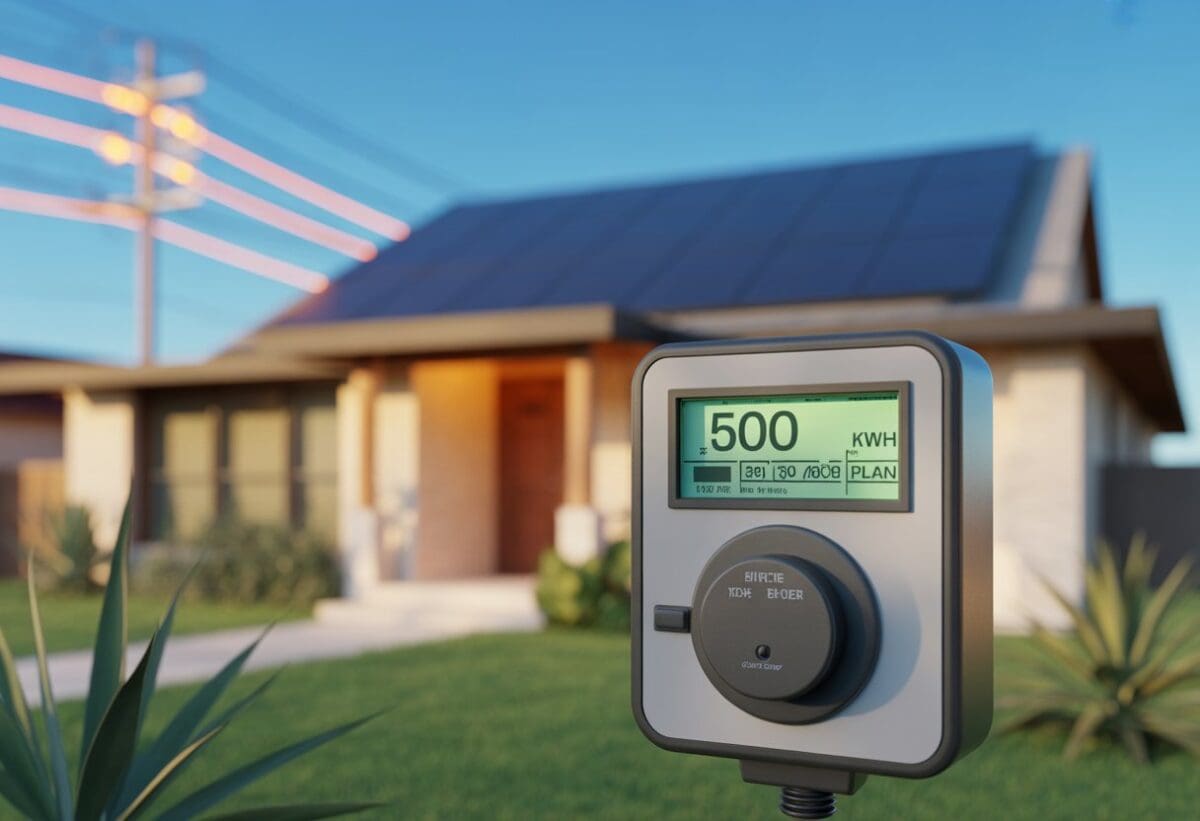
A 500 kWh electricity plan is designed for households that consume about 500 kilowatt-hours of energy per month. This plan typically suits users with low to moderate energy consumption, offering a cost-effective option with either fixed or variable rates, depending on the provider.
Did you know that many Texans could be overpaying for their electricity? While the average household consumes around 1,000 kWh a month, those in smaller spaces or with lighter energy needs often use just 500 kWh. Choosing the right 500 kWh electricity plan in Texas can lead to significant savings, but many people find themselves locked into plans designed for larger homes.
Understanding how these 500 kWh plans work is crucial. In this article, we’ll explore what to watch out for in the fine print and how electricity rates vary across the Lone Star State. By the end, you’ll be equipped to find the best electricity provider that fits your needs, no guesswork involved.
How 500 kWh Electricity Plans Work in Texas
Plan structures, who benefits the most from them, and how Texas electricity rates affect your bill are all factors to consider. Understanding how usage tiers and pricing work helps you determine if a 500 kWh plan suits your household or appears attractive on paper.

⚡ Check Texas Energy Rates

Electricity Plans by Provider – Example
| Provider | Rate per kWh | Minimum Usage Fee | Bill Credit Activation | Effective Rate at 500 kWh |
|---|---|---|---|---|
| Provider A | 20.87 cents | $10 | Above 500 kWh | 22.50 cents |
| Provider B | 21.00 cents | $15 | Above 600 kWh | 23.00 cents |
| Provider C | 20.50 cents | $5 | Above 500 kWh | 21.50 cents |
What Is a 500 kWh Electricity Plan
A 500 kWh electricity plan is designed for homes that use approximately 500 kilowatt-hours of electricity per month. Providers post rates at this level to show what you’d pay if you keep usage steady.
These plans sometimes look cheaper upfront, especially for low-usage customers. However, the advertised rate per kWh often includes bill credits or minimum usage fees, which are only beneficial if you closely match the 500 mark.
Say you see 20.87 cents per kWh at 500 kWh; that’s based on current marketplace numbers. Go over or under that amount, and your real rate changes. The only way to know what you’ll pay across different usage levels is to check the Electricity Facts Label (EFL). Providers usually bury the details there.
Who Should Choose a 500 kWh Plan?
These plans make the most sense for individuals in small apartments, efficiency units, or vacation homes where electricity usage remains low. If you live alone and don’t blast the AC or heater, this tier might save you money.
But if your usage creeps past 700 or 800 kWh, you’ll probably pay more, since the plan isn’t built for bigger consumption. Bill credits might vanish once you pass 500, and the price per kWh can climb fast.
It’s smart to review your bills from the last 6 to 12 months. If you average under 600 kWh, a 500 kWh plan could work. Otherwise, a 1000 kWh plan usually shakes out cheaper in Texas.
How Texas Electricity Rates Affect 500 kWh Plans
Rates swing across Texas, depending on the season, provider, and your city. At the 500 kWh level, the average rate is higher than that of the 1000 kWh tier. Right now, it’s around 20 to 21 cents per kWh at 500 kWh, while 1000 kWh plans go for about 13 to 14 cents.
This gap exists because providers want to encourage people to use their services more frequently. Fixed fees and delivery charges consume a larger portion of your bill at lower usage levels. So, you end up paying more for each kilowatt-hour when you use less.
To keep costs down, compare several providers and weed out plans with steep minimum usage fees. If you know your usage stays low, look for plans that show a fair price at the 500 kWh mark, not ones relying on bill credits that only kick in at higher usage.
Average Rates for Different Usage Levels
| Usage Level (kWh) | Average Rate per kWh |
|---|---|
| 500 kWh | 20 – 21 cents |
| 1000 kWh | 13 – 14 cents |
| 1500 kWh | 12 – 13 cents |
Comparing 500 kWh Electricity Plans by Region and Provider
Plan details and pricing can vary significantly depending on your Texas utility service area. At 500 kWh, rates can swing more than at higher usage, so it’s worth paying extra attention to delivery charges, minimum usage fees, and credits, especially if you’re in a smaller household or apartment.
Oncor Service Area: Dallas and North Texas
In Oncor’s territory (Dallas, Fort Worth, and much of North Texas), most providers set up plans that reward higher usage. At 500 kWh, effective rates often jump above what’s advertised, since minimum usage fees and delivery charges make up a bigger chunk of the bill.
For example, a plan might show 12 cents per kWh at 1,000 kWh, but at 500 kWh, the actual price can rise to 15–17 cents per kWh.Oncor’s fixed delivery charges don’t budge, no matter how little you use, so those costs get spread over fewer kilowatt-hours and push up your rate.
To get the real numbers, always check the Electricity Facts Label (EFL). The EFL spells out the price at 500, 1000, and 2000 kWh. Don’t trust the “average rate” in ads; it rarely fits light usage in Oncor’s region.
CenterPoint Service Area: Houston and Surrounding Areas
In CenterPoint’s area (Houston and nearby communities), plan structures shift a bit. Delivery charges still apply, but some providers offer usage credits that activate at around 500 or 1000 kWh. That can change your bill if your usage hovers near those numbers.
For instance, a plan might toss in a $30 bill credit once you cross 500 kWh. Stay just above that, and your effective rate can drop a lot. But if you slip under 500, you lose the credit, and your price per kWh shoots up.
It pays to read the EFL closely and spot exactly when those bill credits kick in. CenterPoint customers using around 500 kWh a month need to do the math to avoid bill shock.
Choosing the Right Provider for Your Usage
Comparing providers in Texas gets interesting when you dig into how each plan handles a 500 kWh usage level. Some companies advertise “low usage” plans, but a closer look usually reveals extra delivery charges or minimum fees that increase the actual rate.
Instead of just glancing at the headline numbers, it helps to focus on the 500 kWh rate listed on the Electricity Facts Label. The 1000 kWh rate might look appealing, but it doesn’t always match up with what smaller households pay. Bill credits can seem like a deal, but they don’t always kick in at the 500 kWh mark; sometimes, they require higher usage.
And those TDU charges from Oncor or CenterPoint? Nobody gets around those; they’re set in stone across the state. Contract terms matter too, especially early termination fees, which can sneak up if plans change unexpectedly.
Stacking up several providers side by side paints a clearer picture, especially for folks whose usage doesn’t follow the averages. It’s all about matching the plan to real habits, not just what looks good on paper.
Compare Power Plans for the Best Deal
When it comes to finding the perfect electricity plan, comparing options is key! Use Compare Power to explore various plans tailored to your energy needs efficiently. With just a few clicks, you can discover competitive rates, hidden fees, and the best providers in your area. Don’t settle for the first plan you see; ensure you’re getting the best value for your electricity consumption!
⚡ Check Texas Energy Rates
Enter your ZIP code to see lowest electricity rates in Texas


Christian Linden is a seasoned writer and contributor at Texas View, local Texas resident, travel enthusiast.and author of the Home Energy Playbook. He specializes in topics that resonate with the Texan community. With over a decade of experience in journalism, Christian brings a wealth of knowledge in local politics, culture, and lifestyle. When he's not writing, Christian enjoys spending weekends traveling across Texas with his family, exploring everything from bustling cities to serene landscapes.